
Getting your message in front of the correct audience may make all the difference in a world where attention is the ultimate currency. That’s where press release distribution comes in.
It’s an effective public relations tool for companies and businesses trying to develop their brands, advertise their goods and services, share their story and improve their share of voice.
But press release distribution is more than just a way to get noticed. It is a tried-and-true tactic that has changed along with the media landscape from the earliest telegraph era to the hyperconnected digital era of today.
Using press release distribution helps you spread your news faster than posting on your company website. This way you get the most results from writing your press release.
Wondering if press releases still matter? If you agree that your reputation is key to your business growth and building brand trust through effective communication in a world of so much noise, then press releases still matter.
Best 15 Press Release Distribution Services
Here are 15 popular press release distribution services and they are in no particular order:
- NewswireJet
- Business Wire
- GlobeNewswire
- PR Fire
- PRWeb
- Pressat
- PRLog
- Newswire
- PR Underground
- Linking news
- 24-7 Press Release
- eReleases
- PR Newswire
- Online PR Media
- Presswire
Please be aware that the efficacy of these services may change depending on your unique demands and sector. It’s crucial to conduct adequate research and pick a provider that fits both your needs and your budget.
NewswireJet
NewswireJet is a press release distribution service that helps businesses increase their online visibility and reach their target audience. Their press release services also include distribution to top-tier media outlets, including Yahoo! Finance and Associated Press, as well as social media promotion and SEO optimization.

They distribute press releases through various channels, including media outlets, social media platforms, and online news portals.
User reviews and ratings for NewswireJet are generally positive, with users praising their quick turnaround times and effective distribution.
Business Wire
Business Wire is a global news distribution service that offers press release distribution, regulatory filing dissemination, and multimedia distribution services for public and private companies.

Business Wire has received a range of user opinions; some users laud the service for its extensive distribution network and statistics, while others complain about the high price and lack of flexibility.
GlobeNewswire
GlobeNewswire is a worldwide press release distribution service that serves public and private companies, providing them with regulatory filing dissemination, press release distribution, and multimedia content distribution services.

The majority of customer opinions and ratings of GlobeNewswire are favorable, with many users complimenting the service for its user-friendliness and excellent distribution options.
PR Fire
PR Fire helps businesses and organizations effectively distribute their news and announcements to media outlets and online platforms.
With PR Fire, users can create and submit press releases that are then distributed to a wide network of journalists, bloggers, and news aggregators.
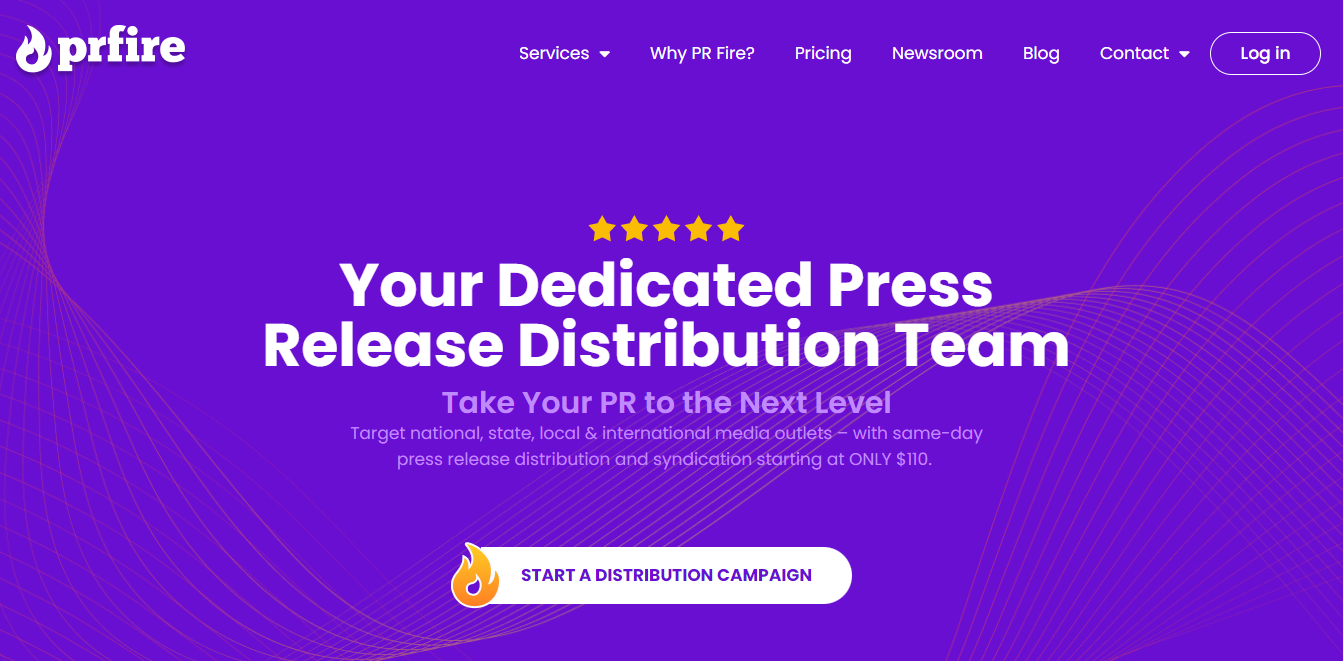
The platform offers features such as targeted distribution, industry-specific channels, multimedia integration, and social media sharing options. PR Fire aims to maximize the visibility and reach of press releases, helping companies generate media coverage, attract attention, and enhance their brand reputation.
PRWeb
PRWeb is an online news distribution service that offers press release distribution and multimedia content distribution services for public and private companies.
Its features include global reach, multimedia content distribution, social media sharing, analytics, and SEO optimization. PRWeb’s pricing varies depending on the type of distribution and geographic location, but its basic press release distribution in the United States starts at $99.
The majority of PRWeb user opinions and evaluations are favorable, with many users complimenting the site for its simplicity and excellent distribution options.
Pressat
Pressat is a reputable press release distribution service known for its global coverage and distribution to media outlets. It offers targeted distribution, industry-specific channels, and multimedia integration.
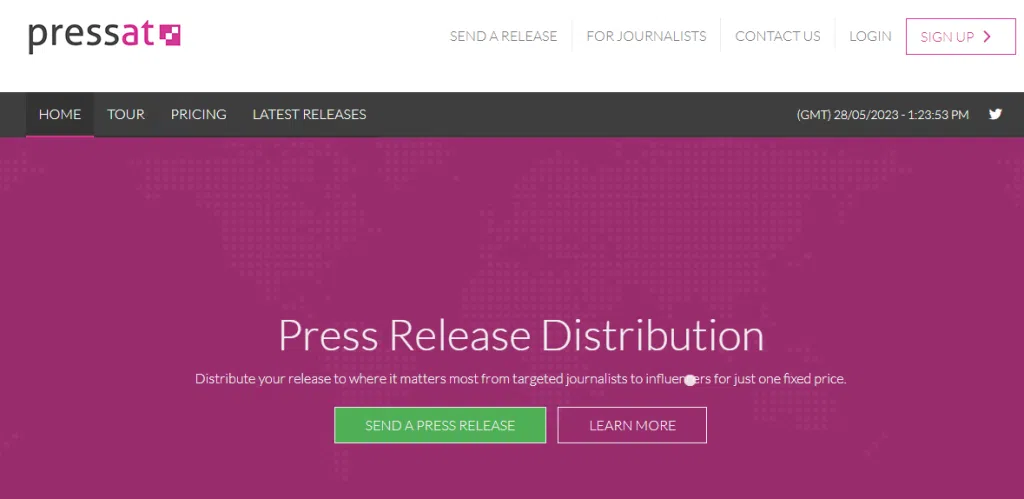
With real-time reporting and analytics, users can track the performance of their press releases.
Pressat provides a user-friendly platform and efficient distribution services, making it a valuable choice for businesses and individuals looking to reach a wide audience with their news.
PRLog
PRLog is an online news distribution service that offers press release distribution and SEO optimization services for businesses and organizations.
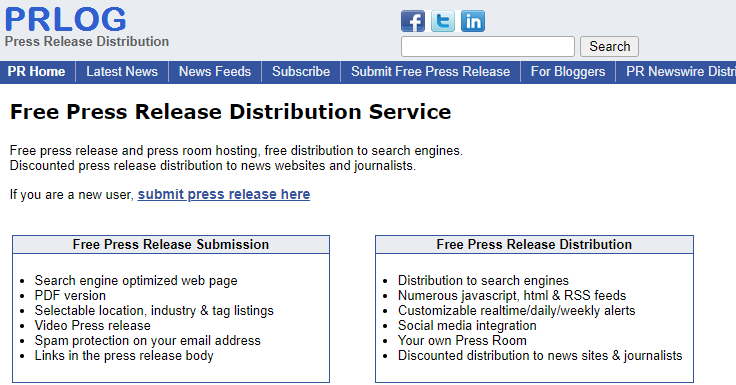
PRLog has received mostly favorable customer feedback, with many users applauding the service for being user-friendly and affordable.
Newswire
Newswire is a news distribution platform that offers a range of newswire services, including press release distribution, media monitoring, and multimedia PR distribution.

User reviews and ratings of Newswire are generally positive, with many users praising the service for its comprehensive distribution network and advanced targeting options.
PR Underground
PR Underground is a press release distribution service that provides affordable news distribution solutions for small businesses, startups, and individuals.
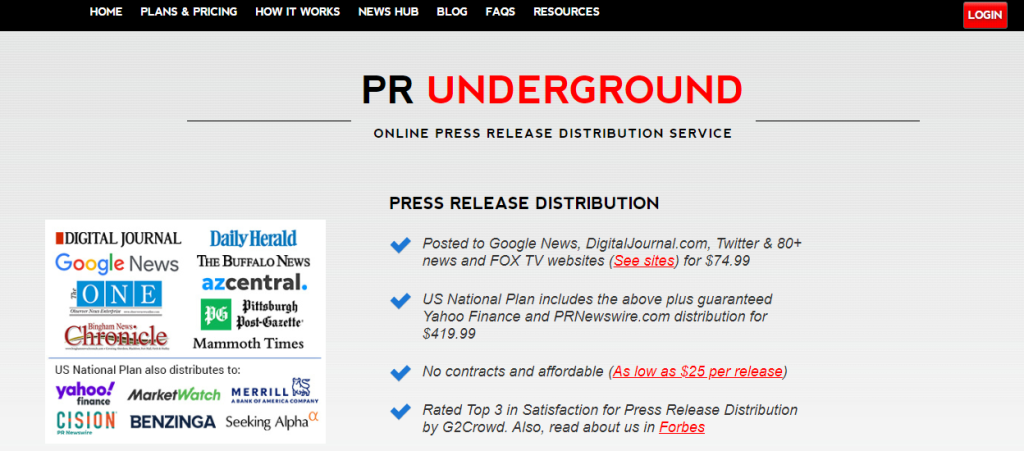
User reviews and ratings of PR Underground are generally positive, with many users praising the service for its affordability and user-friendly platform.
Linking News
Linking News is a press release distribution service that offers affordable and effective solutions for businesses and individuals looking to promote their news and announcements.
User reviews and ratings of Linking News are generally positive, with many users praising the service for its wide distribution network and affordability.
24-7 Press Release
24-7 Press Release is a news distribution service that offers a variety of distribution options and features to help businesses and individuals promote their news and announcements.

User reviews and ratings of 24-7 Press releases are generally positive, with many users praising the service for its affordable pricing and easy-to-use platform.
eReleases
eReleases is a news release distribution service that provides businesses with a platform to share their news and announcements.
eReleases targets both small business, and medium-sized businesses in various industries, including PR distribution in healthcare, finance, and technology. The service has been used successfully by many businesses, including a software company that used eReleases to distribute a press release about a new product launch, resulting in increased media coverage and sales.
User reviews and ratings of eReleases are generally positive, with many users praising the service for its excellent customer service and comprehensive distribution network.
PR Newswire
PR Newswire is a global press release distribution service that offers advanced targeting options, multimedia distribution, and detailed analytics. Pricing ranges from $350 for basic distribution to $805 for targeted distribution.
Pros: Offers a wide range of distribution channels and targeting options, provides detailed analytics and reporting, and has a large network of media, news outlets, and journalists
Cons: Can be more expensive than other press release distribution services and some users have reported issues with customer support and response time
Online PR Media
Online PR Media is a press release distribution service that provides a platform for businesses to distribute their news and announcements to targeted media outlets, journalists, and potential customers.

Their pricing starts at $49 per release and goes up to $389 for their premium service. The platform offers features such as social media sharing, multimedia integration, and analytics to track the performance of press releases.
Presswire
Presswire is a press release distribution service provider that provides companies with a platform to distribute their news and announcements to various media outlets.

Their services include press release distribution, media monitoring, investor relations, and a media contacts database. They provide a range of pricing options from basic to premium, with various feature levels and distribution choices.
Choosing The Best Press release distribution Service
Press release distribution services can offer several benefits to businesses and organizations looking to share their news or announcements with a broader audience. Some of the benefits of using press release distribution include:
1. Press release distribution improves brand visibility: Press release distribution helps you reach a wider audience and increase the visibility of your news or announcements.
2. Press release distribution Improves SEO: Press releases distributed online can positively impact your search engine rankings and overall SEO efforts. When your press releases are published on reputable websites and news platforms, they create valuable backlinks to your website.
3. Distributing press releases enhances your Credibility and boosts your Authority: Distributing press releases through trusted channels enhances your organization’s credibility and establishes you as an authority in your industry.
4. Press release distribution can drive an influx of local customers to your local business: For businesses with a physical presence, distributing press releases can effectively attract people to visit your store. Whether it’s promoting a special event, unveiling a new product line, or offering exclusive discounts, a well-crafted press release can entice potential customers and drive them to visit your store, boosting sales and creating a buzz in the community.
Factors to Consider When Selecting a Distribution Service
- Channels of Distribution
- Geographic Reach
- Targeting Capabilities
- Pricing
- Analytics
When selecting a press release distribution service, the following are some important considerations to make:
Channels of Distribution
Choose a service that provides a variety of distribution avenues, such as social media platforms, online news sources, and sector-specific journals. You can be sure that your target audience will see your release if you do this.
Geographic Reach
If you are targeting a specific region or country, ensure that the distribution service covers that region. Some services may offer international distribution, while others may be more focused on specific countries or regions.
Targeting Capabilities
Check to see if the distribution service has target options like industry, topic, or audience. You may ensure that your release gets seen by those most likely to be interested in your news by taking this action.
Pricing
Compare the pricing plans of different distribution services and choose one that fits your budget. Some services may charge per release, while others may offer subscription plans.
Analytics
You should search for a distribution service that offers thorough analytics, such as the number of impressions, clicks, and social media shares. By doing so, you’ll be able to assess the effect of your release and plan future ones with greater knowledge.
By considering these factors and choosing a distribution service that aligns with your goals, you can effectively distribute your press release and maximize its impact.
Optimizing a Press Release for Distribution
Optimizing a press release for distribution involves several key steps;
- Craft a compelling headline.
- Develop a strong opening paragraph.
- Include relevant quotes.
- Provide supporting details and facts.
- Optimize press release formatting.
- Distribute through relevant channels.
These points focus on creating attention-grabbing content, ensuring clarity and credibility, and effectively distributing the press release to the right channels.
You can improve the chances that a press release will be picked up by journalists and distributed widely by optimizing it for dissemination.
![Press Release Distribution Services: The Ultimate Guide To PR Distribution [2023]-2](/wp-content/uploads/2023/06/image11.png)
What is the Best Way to Distribute a Press Release?
Selecting the best method to distribute a press release hinges on identifying the appropriate channels that reach your target audience most effectively. Firstly, understand your audience’s preferences and behaviours, pinpointing the platforms they frequently use. Employing a blend of both modern and traditional channels could maximize your reach. Modern channels include social media platforms, blogs, and websites where your target audience congregates. Meanwhile, traditional methods include distribution through newspapers and magazines.
Furthermore, consider leveraging press release distribution services, which can amplify your reach exponentially. These services disseminate your press release to various media outlets, journalists, and influencers in your industry. Opt for services that offer features like targeted distribution, analytics, and multimedia support to enhance your press release’s impact. Crafting a well-written, compelling, and newsworthy press release is equally vital to ensure engagement and coverage.
How Do I Choose a Press Release Distribution Service?
Choosing a press release distribution service requires careful consideration of various factors such as reach, pricing, and additional features. Firstly, scrutinize the distribution network of the service. A service with a broader network can potentially provide more visibility.
Moreover, focus on the targeting options available, which help in reaching the right audience.
Look into the additional features offered by the service. Options such as multimedia support, analytical reports, and SEO optimization can provide added value. Also, consider the user interface and customer support quality, as these elements can significantly influence your experience.
Pricing is another critical aspect to consider, balancing between your budget and the offerings of the service. Research and comparison of different services based on testimonials and reviews can be instrumental in making an informed decision.
What is the Best Press Release Distribution Service?
Determining the best press release distribution services in the involves researching various platforms available in the region and evaluating them based on several criteria like network reach, features, and pricing.
Notable services in the often include platforms such as PR Newswire, Business Wire, and ResponseSource, and NewswireJet.
When choosing a service, prioritize those that have established connections with prominent media outlets, thus ensuring a wide reach.
It is also essential to consider the customization options available, allowing for targeted distribution to specific regions or industries within the UK. Analyzing customer reviews and case studies can provide insights into the effectiveness and reliability of the service.
Before finalizing, ensure the service aligns with your goals and offers good value for money.
What is the Largest Distribution of Press Release?
When it comes to the largest distribution of a press release, international services like PR Newswire and Business Wire stand prominent. These platforms have a massive network, encompassing numerous media outlets across various countries and industries. These services are known to distribute press releases to thousands of websites, news desks, and syndication networks, offering a potentially enormous reach.
Moreover, the inclusion of multimedia elements and SEO features enhances the visibility and engagement of the press releases distributed through these platforms. Utilizing such large distribution networks can significantly increase the chances of your press release being picked up by renowned publications and journalists, thereby amplifying its impact. However, leveraging such extensive networks often comes at a premium price, so weigh the potential benefits against the costs before choosing a service with the largest distribution network.
Conclusion
Selecting the right press release distribution service plays a vital role in ensuring the success of your media outreach efforts.
This comprehensive guide has provided valuable insights and considerations to help you make an informed decision when choosing the best newswire company for your press release distribution needs.
By evaluating factors such as distribution reach, media targeting options, pricing models, customer support, and reporting capabilities, you can identify a service provider that aligns with your goals and maximizes the visibility and impact of your press releases.
Remember to conduct thorough research, analyze your specific requirements, and compare different options to make a well-informed choice. With the right press release distribution service by your side, you can effectively amplify your brand’s message, gain media exposure, and achieve your desired communication objectives.