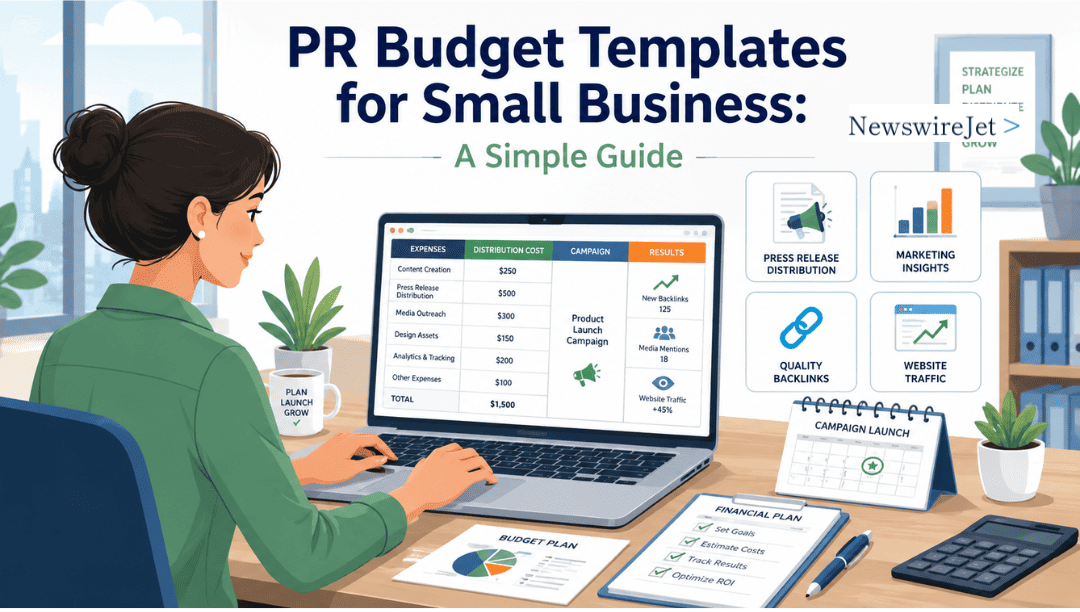
A useful template helps you manage expenses, plan marketing funds, and see how PR links to revenue. You’ll typically build it in Google Sheets or Excel and connect it to your profit and loss statements.
On one sheet, you can compare what you planned to spend, what you actually spent, and the difference across every campaign.
This shows the real value of your PR work and stops cash flow problems during a launch. The rest of this article explains how it works.
PR Budget Snapshot: What Small Businesses Should Remember
A well-structured PR budget template for small business helps connect press-release spending with measurable results while keeping campaign costs organized.
- A clear Small Business Budget Template links press-release spending to outcomes such as traffic, backlinks, and leads.
- Campaign-based planning often places 70–80% of annual PR spending around major launches instead of spreading the budget evenly each month.
- Distribution costs can range from $100 to $1,000+ per release, so structured financial management tools help small businesses track and control PR spending.
Why Many Budget PR Packages Fail Small Businesses
You pay for a service that sends your news out everywhere. They give you a report with a huge number, your "syndication count." It looks good.
But journalists get hundreds of these every single day. They only pick the ones that are actually newsworthy.
Articles in Forbes and PR Daily note companies chase syndication counts over traffic/sales. Lots of companies love that big number. They forget to check for real outcomes, like people visiting their website or becoming potential customers.
For a small business, there's another issue. The money for PR is part of the overall company budget. It's fighting for dollars against things like marketing, sales efforts, social media promotion, and just paying the bills, which is why many teams try to align their PR spend with a broader marketing budget.
Those inexpensive distribution packages? They promise you'll reach tons of people. The results are usually just for show.
You'll see a list of hundreds of automated placements. What you won't see is a meaningful jump in traffic to your site, or any new sales.
Why does this happen? A few usual reasons.
- Everyone looks at the syndication report instead of asking if it led to any measurable conversions.
- They use a generic blast to everyone instead of contacting specific journalists directly.
- Their budget planning doesn't use financial data or sales forecasts.
- They don't track it with tools like cash flow budgets, expense reports, or campaign analytics.
If you spend money on PR but can't connect it to a goal you can measure, the boss will start asking questions. Fast. You see this constantly in smaller organizations, where the monthly expenses, fixed costs, and other variable costs are already stretching things thin.
What Is the Core Structure of a Press-Release PR Budget Template?
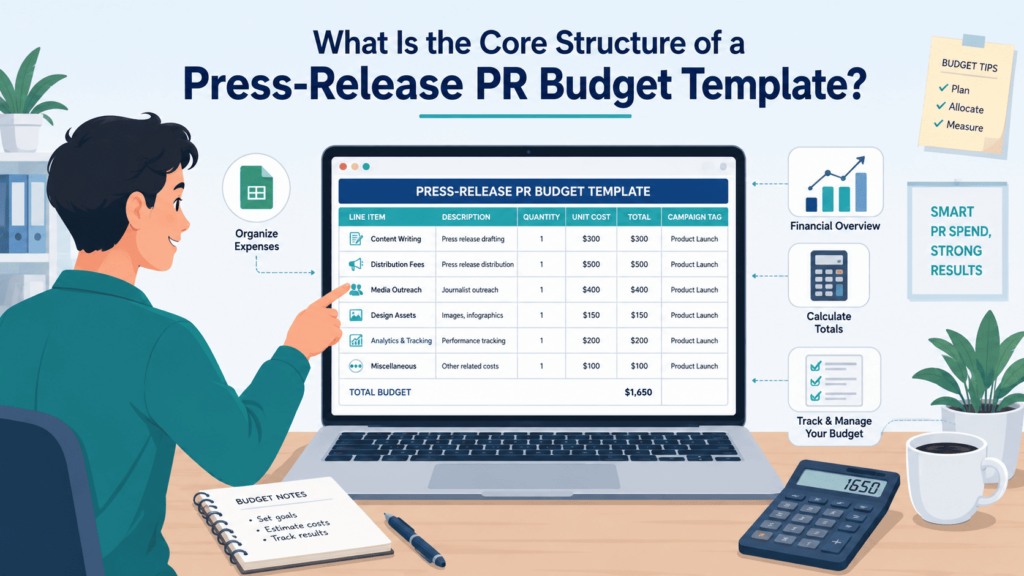
A PR budget is just a plan for your campaign money, written in a spreadsheet so it adds itself up.
You build it in something like Excel. These are the columns you need:
- Line Item: The expense category. "Press release writing" or "event venue."
- Description: A short reason. "For the product launch in June."
- Quantity: How many. Three press releases, or twenty hours of design time.
- Unit Cost: The price for one unit or one hour of work
- Total: The column that does the math (Quantity multiplied by Unit Cost).
- Campaign Tag: A label to sort costs, like "Q3 Campaign."
This setup gives each project its own financial snapshot. You can compare your spending estimate with the real invoice amounts. A large difference between the two means something probably went off track.
According to Jurnal Ilmiah Akuntansi Kesatuan (JIAKES),
"Limitations such as lack of access to reliable accounting information, low financial literacy, limited use of digital tools, and capacity constraints frequently lead SMEs to adopt intuitive, informal, and undocumented budgeting approaches." - Jurnal Ilmiah Akuntansi Kesatuan
In most companies, this PR spreadsheet feeds into the larger master budget. That shows how communication spending affects the business's overall financial health. It's a core part of planning, the U.S. Small Business Administration highlights structured budgeting as key for small business stability.
Since you're using a spreadsheet, you can make it smarter. Set a rule to color-code any line where spending exceeds the plan.
Generate a simple chart to see which campaign is costing the most. These tweaks change a static list into a useful tool for managing both your money and your PR goals.
How Should Small Businesses Budget for Press Release Distribution?
The price for putting out a press release? It's not a simple number. It could be a couple hundred bucks, or it could be well over a thousand. What you pay comes down to three things: how many people you reach, how carefully you target them, and the extra services you tack on.
For a small business, this isn't just a purchase, it's a strategy call. Do you want a loud siren for a huge crowd, or a quiet knock on a specific editor's door?
According to Research from International Journal of Digital Research (IJDR),
"Bootstrapped PR is less a temporary fix for the cash-strapped than a strategic battleground where wit and candidness can overtake budget restrictions." - International Journal of Digital Research
Let's look at the real costs. A full national wire distribution, the kind that gets you in front of thousands of outlets, typically starts above $1,000 per release.
A more focused online distribution, or a targeted email campaign to a curated list of journalists, often falls in the $100 to $300 range. That's not a small difference. When money is tight, that gap defines your entire approach.
| Distribution Method | Typical Cost Range | Best Use Case |
| National wire distribution | $1,000+ | Reserved for major, company-defining news like a significant investment round. |
| Online digital distribution | $100–$300 | Effective for broader product launches or brand awareness campaigns. |
| Manual journalist outreach | Time investment (no direct fee) | The only way to secure targeted, in-depth coverage in a specific publication. |
This isn't just about picking a service. It's about aligning your spending with what actually moves the needle for your business. Analysis from places like the Harvard Business Review consistently shows that marketing budgets should be linked to concrete objectives, not vanity metrics like "impressions."
For a small company, a costly scattergun approach to PR rarely pays off unless the announcement itself is monumental.
So, what's the practical move? Most successful small teams use a hybrid model and often rely on volume discounts when scheduling several releases across the year. They save the expensive wire blast for their one or two biggest announcements.
For other news, they invest time in building direct relationships with reporters, sending personalized pitches. Everything is then supported and extended through owned channels like social media and their blog.
This method is more sustainable. It conserves cash while building the kind of media credibility that a one-time blast simply can't buy.
What Line Items Should Appear in a Press-Release Budget?
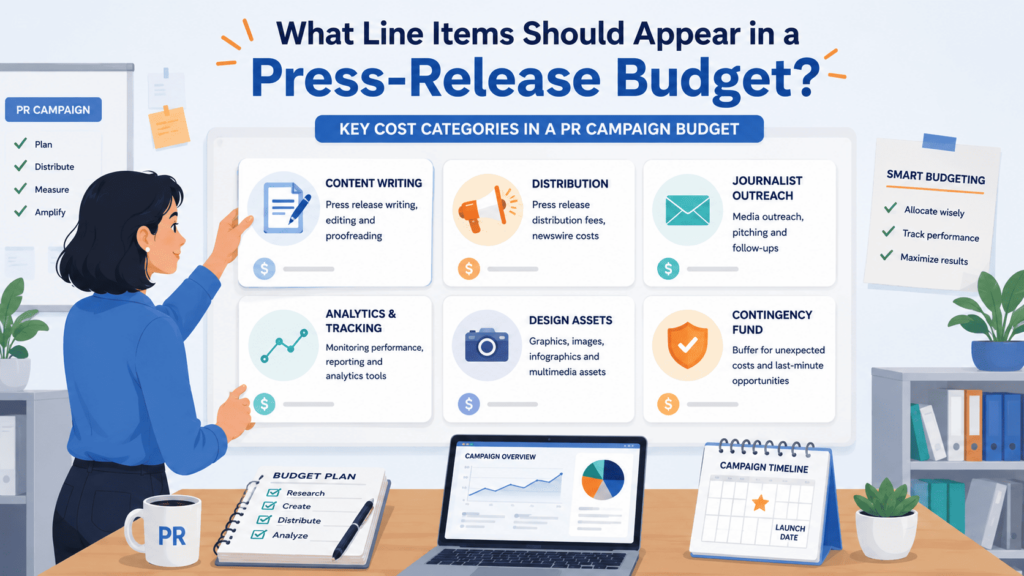
Let's talk about a real PR budget. It needs money for a few basic things: planning what to say, writing it up, sending it out, talking directly to reporters, buying tools, checking if it worked, and having cash ready for surprises.
Industry benchmarks show 30-50% of PR budgets often go to distribution. Most budget plans for small businesses split up the spending. This shows you the cost for each project you run.
First, Plan Your Strategy
You have to decide on your main point and pick the right time to share it. If you plan well, you won't waste money on news that doesn't help your company.
What do you spend money on here?
- Meetings to plan your message and campaign.
- Money from the big company plan moved over for PR.
- Writing down the main things to say and how to explain the story.
This work fits into the company's larger goals. It makes sure PR money is spent on stuff that matters later.
Next, Make the Content
You have to write and fix up the press release. This is the core of it. Even a tiny business will use time or pay a writer to do this.
You'll likely pay for:
- Someone to write and edit the press release.
- Changing it for different countries or areas.
- Getting good quotes from the boss or smart comments from experts.
These costs also link to the marketing team's calendar. That calendar lines up when you post on social media, send emails, and update the blog.
Then, Distribute It
This is how you get the release to the media and onto websites.
You pay for services like:
- Companies that blast your release out online.
- Lists of journalists or email programs for reaching them.
- Choosing to send it only to certain places or types of business.
Sending it out is often the biggest cost in the whole PR budget. Many budget sheets track it alone, inside the marketing and ads section.
Do Some Direct Outreach
This means you find specific reporters and send them a note yourself.
Money here goes to:
- Finding and updating your list of journalists.
- The hours you spend writing personal emails to them.
- Coffee meetings to get to know reporters.
This part usually needs more people's time than it needs cash. So, the budget should show those work hours and where that time comes from.
Get Tools And Extra Stuff
A press release is stronger with pictures, charts, or a special webpage.
Budget for things like:
- Making a press kit with all the extra info.
- Paying a designer or a photographer.
- Software that watches for where your story shows up.
Teams often also pay for regular software or project tools to help run everything.
Measure What Happened
You need to see if the money did anything. You track the results.
What do you look at?
- How many places wrote about you, and were they good ones?
- People coming to your website from the news.
- New customer leads that started from the press release.
To track this, you usually need a dashboard for numbers and a clear way to report the finances.
Keep a Backup Fund
PR can shift fast. Something big happens in the world, or you get a sudden chance.
Most budgets save 5% to 15% for "just in case" money. This is for urgent announcements, bad news responses, or lucky breaks.
This extra money keeps the main budget stable. It stops a random PR need from ruining your other plans.
How Small Businesses Handle “Lumpy” PR Spending Instead of Monthly Budgets
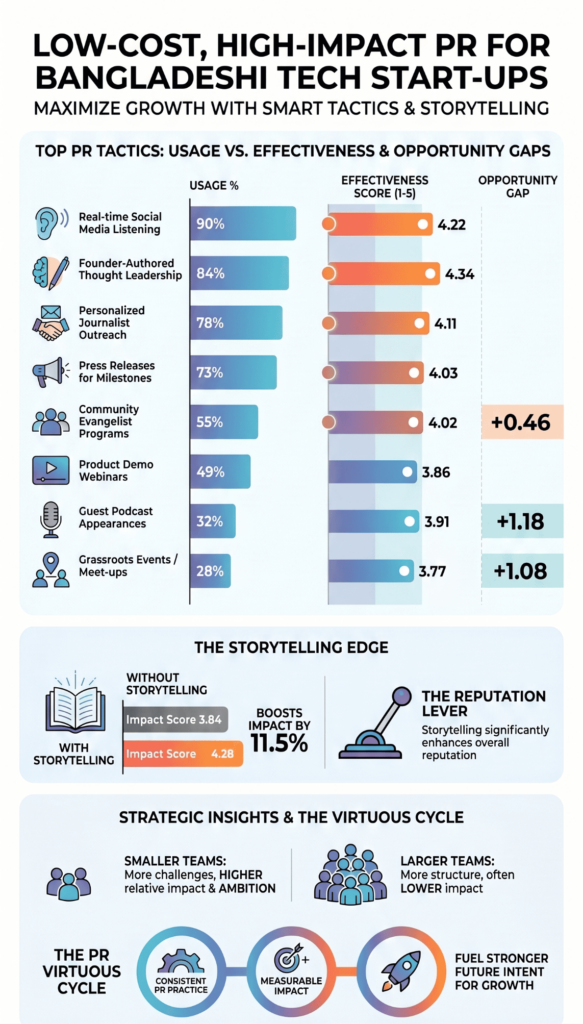
You're pushing back on rigid monthly budgets for a good reason. Press activity isn't steady. For most small companies, it's a feast-or-famine cycle.
They'll save up and then drop 70% or more of their annual PR spend in one shot, for a launch, a funding round, a holiday push.
Trying to fit that spike into a flat, monthly template is pointless. It's like using a calendar to plan a fireworks show.
That's why we gave up on monthly tracking. We plan and budget by campaign, the same way a film crew budgets scene by scene, not by the week. Many teams apply structured PR budgeting methods so each campaign has its own spending plan. It just fits reality better.
Here's what that looks like in practice:
- The Launch Pool: Money set aside just to get a new product announcement out the door.
- Campaign Tracking: Watching the budget burn down for each specific push as it happens.
- The "What If" Plans: Having clear numbers ready for if things go perfectly, and for if they fall flat.
This method has a couple of concrete benefits. First, workload becomes visible. You can see exactly how much writing, pitching, and coordinating a campaign will demand from your people.
Second, it stops treating PR like its own isolated island. Your press release budget can now directly sync with your ad buys, partnership timelines, and event schedules. Everything works together instead of on separate spreadsheets.
You end up with a budget that actually bends to the shape of your work, not the other way around.
How to Tie Each PR Budget Line to Measurable Results
Credits: The Seasoned Marketer
For your PR budget to be useful, every line needs a number attached to it. What did you get for the money? More referral traffic? New backlinks? Actual leads? Spending decisions have to be grounded in what you can measure.
A lot of marketing research comes back to the same point. They emphasize tracking things like conversion rates, whether your domain authority grows, and how much website traffic a campaign announcement drives.
Making this work usually involves two simple steps.
First, your teams should attach tracking parameters, like UTM codes, to any links you put out. Links in press releases, landing pages, social posts. This tells you if visitors came from a media mention, a content piece, or a social share.
Second, your budget template should have two columns: one for the projected result, and one for the actual outcome.
Typical metrics you'd track next to PR spending are:
- Website visits that came from media coverage.
- Leads or sign-ups directly linked to an announcement.
- Simple visibility measures, like the audience reach of the publications that covered you.
This ties the budget directly to marketing performance.
The template becomes really helpful when it shows a disconnect. If a campaign drove strong traffic but almost no leads, you know exactly what to tweak next time. Maybe the landing page needs work, or the message wasn't quite right.
This process, plan, measure, adjust, transforms a basic spreadsheet. It stops being just a record of expenses and starts being a tool for planning your next move.
FAQ
How can a small business create a simple PR budget template?
A small business can create a clear budget template by listing essential budget categories such as media outreach, content marketing, events, and marketing and advertising activities. The template should also include operating costs, labor costs, and other variable expenses.
The team should track campaign-related revenue streams and compare them with the marketing budget. This structure organizes financial data and supports accurate financial planning for public relations campaigns.
What budget categories should a PR campaign include?
A PR campaign budget should include clear budget categories such as operating expenses, labor budget, media outreach costs, content marketing, and marketing and advertising activities. A small business may also include software subscriptions, event costs, and social media promotion expenses.
Organizing these items helps teams review financial information, track campaign spending, and improve project management when planning and evaluating public relations activities.
How does cash flow affect PR campaign budgeting?
Strong cash flow management allows a small business to run PR campaigns without creating cash shortages. A cash flow budget or cash flow statement shows when payments for vendor bills, media outreach, or advertising expenses occur.
Tracking monthly business expenses alongside incoming revenue helps the team maintain a realistic marketing budget and adjust campaign spending during regular monthly planning.
Should PR budgets include fixed and variable costs?
Yes, a PR budget template should clearly separate fixed costs and variable costs. Fixed expenses may include items such as office rent or recurring software subscriptions. Variable expenses may include media outreach costs, event promotion, or marketing and advertising activities.
This structure helps teams evaluate operating costs, improve financial forecasts, and strengthen overall financial management tools used to review campaign performance.
What financial documents help track PR spending?
Several financial documents help track PR spending effectively. These documents include a Profit and loss report, balance sheet, and cash flow statement. Many small business teams also maintain income and expense sheets and detailed expense report records for campaigns.
These documents organize financial data, monitor operational expenses, and show whether the marketing budget plan supports the overall business budget.
Turn Your PR Budget Plan Into Real Visibility
You can build a neat PR budget, track every cost, and still feel stuck when the results barely move. That’s the frustrating part. Planning is the easy step, turning those numbers into real media coverage is where most small businesses hit a wall.
This is where a practical distribution tool helps. Instead of guessing where your press release will land, you can push it to real outlets and see the reach in your reports. If you want a simple next step after planning your PR budget, try publishing your release through NewswireJet and turn that plan into actual media exposure.
Related Articles
- /leveraging-volume-discounts-for-press-releases/
- /pr-budgeting-for-small-business/
- /allocating-marketing-budget-for-press-releases/
References
- https://jurnal.ibik.ac.id/index.php/jiakes/article/view/2686
- https://ijdr.net/wp-content/uploads/2026/03/Exploring-Low-Cost-High-Impact-PR-Strategies-among-Early-Stage-Tech-Start-Ups-in-Urban-Bangladesh_CC_BY_4.0.pdf