Written by Nell VH
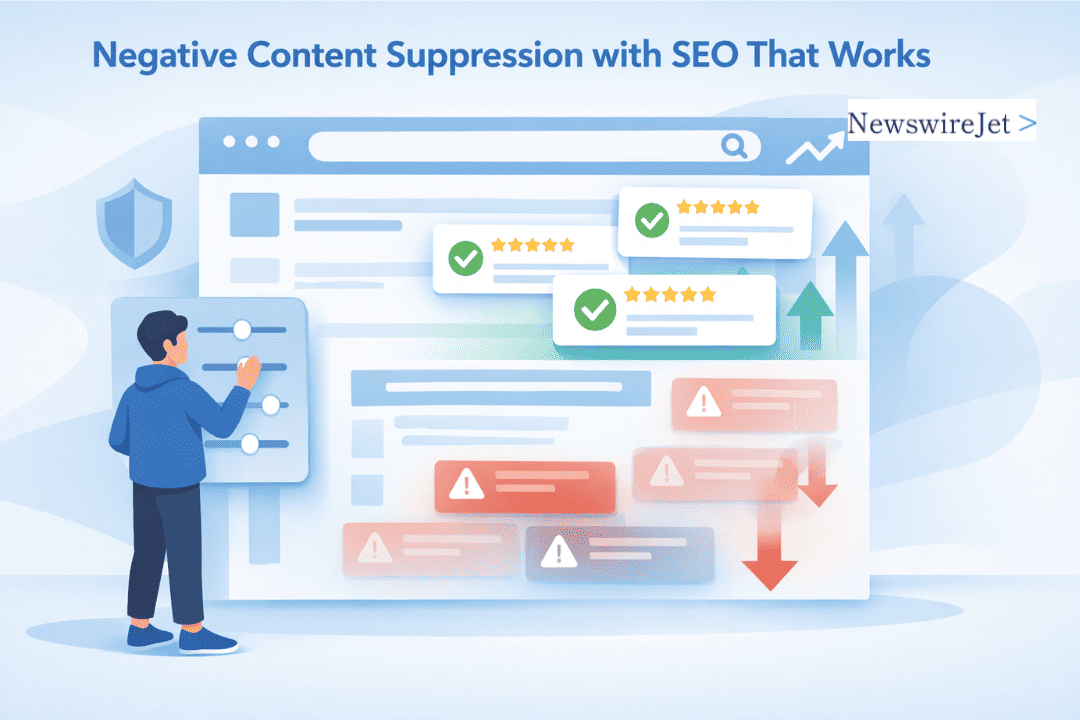
Negative SEO suppression works by making good content outrank the bad stuff, strengthening your online reputation, strengthening your online reputation through better SEO positioning.
Why bother? Because most customers believe what they read online. Up to 20-40% per review platform studies.
If those negative results are the first thing people find, you're losing money and trust every day. This isn't about spin; it's about protecting your business.
The goal is to get your branded search results back under your control. To understand the specific steps we take, continue reading.
Search Control Snapshot: Negative Content Suppression with SEO
These points sum up how we use SEO to control visibility, reduce negative search results, and rebuild a stronger online reputation.
- We suppress negative search results by pushing them beyond page one using high-authority SEO assets, a core part of suppressing negative content and improving reputation management.
- We combine content removal SEO and reputation SEO strategies for maximum control
- We build long-term brand trust through positive content promotion and strong E-E-A-T signals
Suppressing Negative Content SEO
Bad search results hurt. SEO suppression pushes them off page one, making suppressing negative content one of the most effective SEO tactics for visibility control.
We build enough positive content to control the first page. Aim for 70-90% positive results via content assets. That’s the standard for modern reputation management.
According to Wharton Executive Education,
"Optimizing content for target keywords... helps to push negative content further down in search engine results. By consistently publishing and optimizing positive content, you can push negative results further down in search rankings, making them effectively invisible to most users." - Wharton Executive Education
We create pages that answer what people are already searching. Terms like “[brand] reviews” or “[brand] complaint.” We rank our answers above the negative ones.
The main pieces we build:
- Blog posts with strong internal links.
- Press releases optimized for SEO.
- Fully filled-out business profiles on directories.
- Video testimonials and infographics.
Together, these assets dominate the search results. They push negative links down over time.
Removing Bad Content SEO

Getting damaging stuff off the internet is a headache, especially when dealing with bad content. That's what content removal SEO tries to do.
You want to delete the page, but websites have policies, and free speech protections get in the way. Success isn't guaranteed.
First, you identify the problem. Is it libel? Fake reviews? Did someone post private information, like a home address?
The easiest fix is if you own the website. You just delete it. If someone else posted it, you might try contacting them directly. A polite request can work, especially if their post is sloppy or obviously incorrect.
When that doesn't pan out, you use more formal methods.
You report the content to the website platform itself, using their official system, if it breaks their specific rules.
For pages that leak sensitive personal info, you can ask Google to remove the page from its search index. The page stays on the internet, but people can't find it through Google.
With serious defamation, the path often leads to a lawyer. Legal pressure, through a demand letter or a lawsuit, might force a removal.
Honestly, trying to delete things is a tough, uphill battle. It's often more effective to push the bad content down in search rankings using other SEO work. So, most reputation plans use both: you try to remove the worst pages, and you definitely work to suppress everything else.
Suppressing Negative Reviews

Getting slammed with negative reviews can wreck your sales. Studies have found that hitting 3-5 negatives can deter 60-80% of buyers.
The fix isn't to delete the bad stuff, that's usually impossible. The real move is to drown it out with a wave of good, honest feedback from your happy customers.
We help you systematically get more of those positive reviews. This means setting up straightforward campaigns to collect feedback on the spots that matter: Google, Facebook, industry-specific directories.
The point is to build up visible, authentic praise. This does two things: it makes new visitors trust you more, and it sends strong "trust signals" to Google, which helps your local SEO.
Then you have to handle the reviews you've got. Our strategy is pretty direct:
- Respond quickly. Most people expect a reply within a day.
- Don't dodge criticism. Address concerns openly and honestly. This alone can shift public perception.
- If you fixed a problem for someone, highlight that resolution. It shows you listen and makes a good story out of a bad one.
We also use a technical setup called review schema markup.
This is just code that tells search engines about your star ratings, which can make those stars show up right in the search results. It's a small thing that makes a big difference in click-through rates.
Nailing this process is the baseline. Once it's running, we can layer on more advanced strategies to fully protect your online reputation.
Managing Negative SEO

Think of negative SEO as online vandalism. Someone wants your site to rank lower, so they spray graffiti all over your link profile. That graffiti is often thousands of spammy links or fabricated negative content.
Our job is to be the cleanup crew. We use scanners that constantly check your site's back alleyways.
They alert us if there's a sudden pile of trash, links from known spam sites or a weird pattern of linking words. This lets us protect your site's standing.
When we find the vandalism, we get to work:
- The Disavowal. We give Google a formal notice: "Please ignore these specific bad links."
- Crawl Management. We tweak settings so Google's crawler, the bot that reads your site, spends its time on your main showroom, not the dumpster out back.
- Access Control. We lock the doors to fake or harmful pages using robots.txt files, so search engines can't even see them.
A big part of this is watching Google's taste. It's always changing, but lately it prefers honest, useful content from sources that know their stuff. We make sure your site stays in that good category.
Content Removal Techniques
Getting harmful stuff off the internet is a three-step process focused on content removal. We talk, we tweak the tech, and sometimes we push harder.
First, we just ask. A lot of websites, especially the smaller ones, will delete a page if you send them proof it's inaccurate. It's the easiest fix.
If asking doesn't work, we use technical SEO tricks. For pages we actually control, we can add a "noindex" tag. That tells Google not to list it.
We can also use a canonical tag to make search engines favor a good version of the story. Another option is a 301 redirect, it sends everyone who clicks the bad link to a good page instead.
The last resort is more aggressive. Occasionally, we'll buy an old website that's still showing negative content. Once it's ours, we can erase the bad stuff and use the site for something positive.
Here's what each method looks like in practice:
What we do
Effectiveness
Timeline
Risk
Contact the publisher
Medium
Fast
Low
File a Google removal request
Medium
Fast
Low
SEO to push it down
High
A few months
Low
Legal defamation case
High
Long
Medium
These tactics only really work when they're combined into one strategy. You can't just do one and expect the problem to go away.
Reputation Repair SEO

People Google your company. Right now, they might find the bad stuff first. That hurts. Reputation SEO changes the search results by strengthening reputation repair.
We put the good news, your real story, at the top. For some clients, this means their website traffic from Google multiplies. We've seen increases from double to more than fifteen times the original volume.
According to Research from ResearchGate,
"SEO is not only important in increasing brand visibility but also in building consumer credibility and trust... effective SEO strategies, businesses can promote positive content, mitigate the impact of negative search results, and maintain a strong online presence." - ResearchGate
We build a system, not just a page. It starts with a flagship page. This is your definitive answer, your strongest proof point.
Everything else connects to it. We write articles that support the message.
We turn client successes into detailed stories. We collect and highlight real reviews from customers.
But Google trusts some voices more than others. So we get you those voices. We secure mentions and links from well-known industry sites and legitimate news outlets.
We place articles you write on other reputable websites. We get you interviewed on podcasts. We work with actual experts in your field to review your service.
Search engines are starting to use AI to answer questions directly on the results page. We prepare your content so that when Google's AI summarizes you, it uses our words.
Once this network of positive, credible content is live and ranking, we use more targeted methods to push down any remaining negative news stories.
Suppressing Harmful Press with SEO
To get harmful press off the first page. You need either more clout or a sharper SEO strategy than the big news sites.
One way is with press releases, but done a specific way. We use distribution services that are part of larger online reputation networks.
They don't just send it out; they place it on a web of partner sites that Google already trusts. Because of that existing trust, your release can start ranking in a matter of days, not months.
You also have to make your own brand look more credible. We do a few things for this.
- We get your people featured in real news articles by answering queries from journalists.
- We push positive news pieces to rank for searches people make about your company.
- We use a co-citation approach, getting your name mentioned alongside other established, trusted names online. This makes search engines associate you with that credibility.
Finally, we don't stop at written words. We produce video clips and podcast episodes based on the positive story. This creates more entries in the search results, video carousels, podcast sections, that take up space.
And video and audio keep people on the page longer. Google sees that higher engagement and uses it as a vote of confidence, which helps your overall search rankings.
Negative SEO Tactics
Someone’s trying to sabotage your website. That’s negative SEO. They build thousands of garbage links pointing to your domain. They write fake bad reviews.
They copy your articles and paste them on spam sites. Google sees all this noise and starts to doubt your site’s credibility. If you don’t notice, your rankings drop.
You need to watch for it, constantly. We run tools that track your online reputation and backlinks. They alert us to strange patterns, like a sudden wave of negative chatter or links from shady websites.
Catching it early is everything. It stops a small problem from becoming a major one.
When an attack happens, we move fast using SEO tactics. First, we hunt down the duplicate content and get it taken down. We set up canonical tags so search engines know which version is yours.
Next, we check your own site for any thin, low-quality pages that could make you vulnerable and we improve them. We also make sure your site loads fast and works perfectly; a technically strong site is harder to undermine.
We never use shady tricks like private blog networks. Our methods are clean and transparent. The only way to build lasting results is with a spotless reputation. Anything else is just borrowing trouble.
Controlling SEO Reputation
SEO reputation management is about controlling reputation. It's your website, your LinkedIn, your Google reviews, and even a news article from last year.
First, we lock down the stuff you own. We make sure your website is perfectly tuned for searches that include your brand.
That means fixing the technical stuff on your homepage, writing blog posts that actually help people, and linking your pages together in a smart way to show you're an authority.
Then, we push outwards. We get your name, address, and phone number exactly right on every directory like Yelp or Yellow Pages.
We jump into conversations on sites like Reddit or Quora to guide the story. We also get people talking about you on social media in a real way, not just automated likes.
To know if it's working, we look at one main thing: how much of the first page of Google results is about you, and is it the stuff you want people to see?
We track that percentage of control. If it's low, we change our approach until we own more of that page.
Online Reputation Management Content Management
Credits: Chaz Edward Local Marketing
You manage your reputation online by applying structured content management. It's about what you write, how you tweak it, and where you post it. The point is to make people see your brand in a good light, whether they find you on Google, Facebook, or a review site.
We build this using a silo structure. Imagine organizing a filing cabinet. All the documents about one topic go in the same drawer, and they all reference each other.
That's what we do with content. Every blog post, FAQ, or profile supports a bigger, clearer story about who you are.
We work on two things at the same time: the stuff you read and the stuff computers read.
For the computers, we set up your pages so search engines get the message. We write specific titles and descriptions for pages about your reputation.
We link pages together inside your website to spread credibility. And we try to make pages so useful that people stick around, which search engines notice.
For the stuff you read, we don't do all the talking. We bring in other voices. We use content from your actual customers, their reviews, their social media posts.
We also help your own employees talk about the company. When real people are saying good things, it feels more trustworthy than any ad.
This lets us create a lot of believable content without it all coming from the marketing department, building up credibility across different platforms.
FAQ
How does online reputation management help in suppressing negative content?
Online reputation management helps suppress negative content by improving the visibility of positive, relevant pages in search results. We apply SEO reputation repair, branded search optimization, and consistent positive content promotion to shift rankings.
By strengthening E-E-A-T signals and using structured ORM content tactics, we can gradually push negative search results lower and gain better control over search perception.
What are effective strategies for controlling negative search results on Google?
Effective strategies for controlling negative search results include building strong reputation SEO strategies such as SERP domination and branded keyword ranking. We publish optimized blog content, apply press release SEO, and improve backlink reputation building.
We also monitor negative SERP activity, fix duplicate content suppression issues, and strengthen topical authority to ensure that positive pages rank consistently above harmful content.
Can SEO help with negative review suppression and harmful press issues?
SEO can support negative review suppression and harmful press suppression by improving the visibility of trustworthy content. We use review management SEO, structured review response strategies, and testimonial optimization to build credibility.
When necessary, we also explore content removal SEO, defamation removal, and Google deindexing. Positive content promotion and social proof SEO further help balance public perception.
How do ORM content tactics improve search reputation over time?
ORM content tactics improve search reputation by consistently publishing and promoting high-quality content. We use case study promotion, thought leadership content, and video testimonial SEO to build authority.
In addition, content cluster reputation, internal linking reputation, and authority link building strengthen rankings. These efforts increase share of voice and reduce the visibility and impact of negative search results over time.
What technical SEO steps support reputation SEO strategies effectively?
Technical SEO supports reputation SEO strategies by ensuring that positive content is properly indexed and ranked. We implement indexation control, apply noindex negative pages where possible, and optimize crawl budget efficiency.
We also improve page speed SEO, core web vitals ORM, and mobile first reputation. Using schema markup reviews and rich snippet reputation enhances visibility and strengthens search performance.
Take Back Control of Your Search Results
You see harmful links sitting at the top, and it feels like every click works against you. It’s frustrating.
Negative Content Suppression with SEO gives you a clear way to push down what’s hurting your brand and replace it with content you actually want people to see.
That’s where NewswireJet comes in as a simple next step. It helps you publish trusted content on real media sites, so your positive story shows up first.
Start building your reputation strategy today with NewswireJet and take control of what people find when they search.
Related Articles
- /seo-for-online-reputation-management/
- /suppressing-negative-content-seo/
- /removing-bad-content-seo/
- /suppressing-negative-reviews/
- /managing-negative-seo/
- /content-removal-techniques/
- /reputation-repair-seo/
- /suppressing-harmful-press-with-seo/
- /negative-seo-tactics/
- /controlling-seo-reputation/
- /online-reputation-management-content-management/
References
- https://executiveeducation.wharton.upenn.edu/thought-leadership/wharton-online-insights/small-business-online-reputation-management-tips/
- https://www.researchgate.net/publication/382953524_The_Effectiveness_Of_Search_Engine_Optimization_SEO_In_Marketing_A_Meta-Anlysis_Study