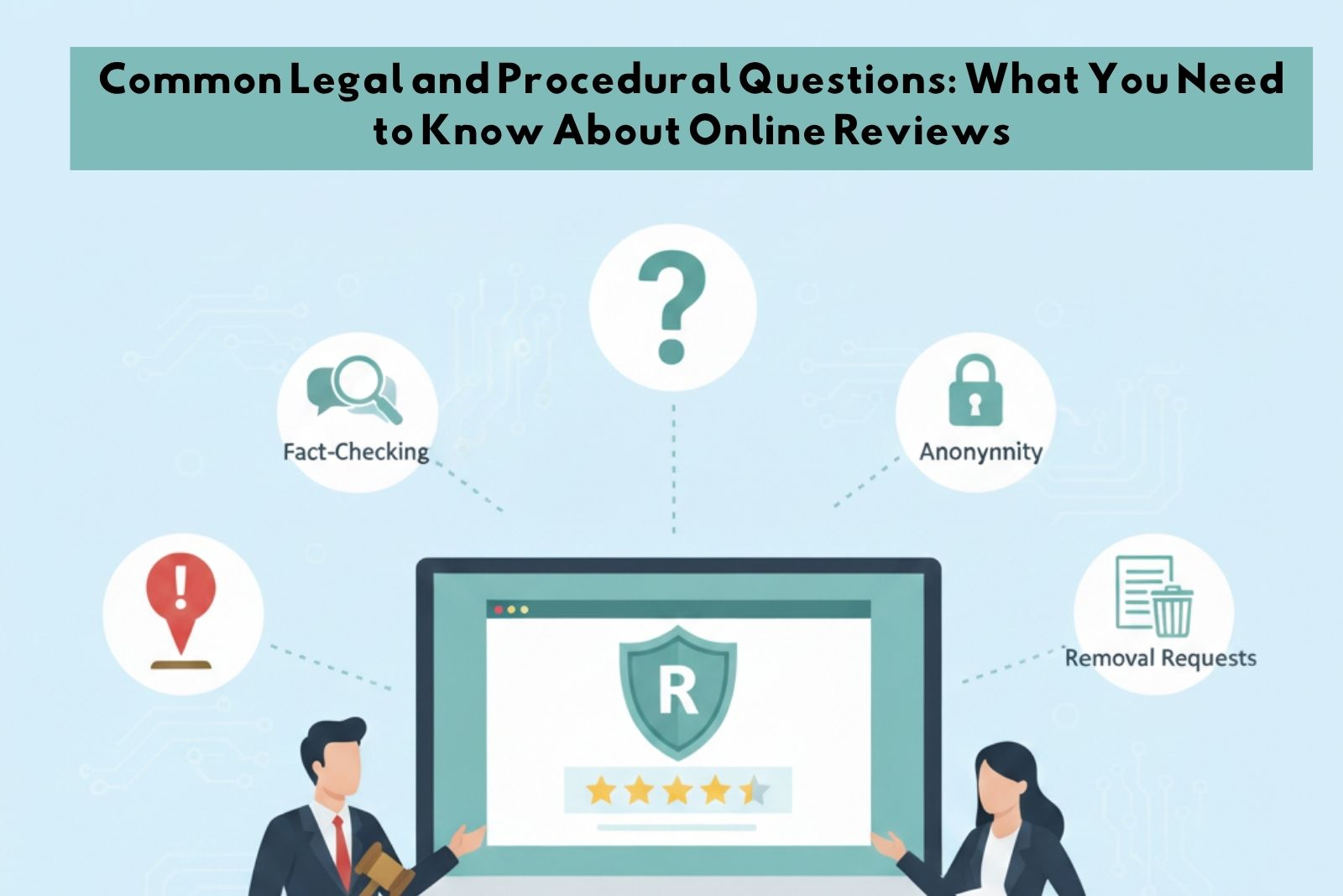
Online reviews can shape a business’s fate. They sway customers, build trust, or sometimes cause headaches when things go wrong.
But what happens when reviews cross legal lines? Can we get sued for a negative review? How long does it take to get a fake review removed? What rights do reviewers hold?
These are not just theoretical questions , they touch real concerns for businesses and consumers alike.
This article answers the most common legal and procedural questions about online reviews, helping our understand your rights, responsibilities, and options. Keep reading to get clarity on this tricky terrain.
Key Takeaway
- We can be sued for a bad review only if it contains false, damaging statements (defamation).
- Google typically takes about a week to remove flagged reviews that violate policies.
- Both reviewers and businesses have rights and responsibilities, with legal recourse available against fake or defamatory reviews.
The Legal Risks of Online Reviews: What’s at Stake?

Online reviews might seem straightforward: share your honest opinion, right? But it gets complicated quickly. Many businesses and reviewers don’t realize that crossing the line into false or harmful claims can spark legal trouble. It’s a blurry line between opinion and defamation.
Confusion reigns because laws vary by jurisdiction and platforms have their own rules especially in reputation repair.
Usually, disputes center on whether a statement is a protected opinion or an untrue fact damaging a business’s reputation. For instance, saying “I didn’t like the service” is an opinion.
Claiming “They stole my money” when untrue can be defamatory. Understanding these distinctions is crucial to avoid misunderstandings and costly lawsuits.
Everyone involved must grasp their rights and limits. Businesses need to know how to respond and remove harmful content. Reviewers should learn how to express themselves honestly without risking legal action. Knowing procedural steps, like filing complaints or appeals, also matters to navigate issues efficiently.
Can You Be Sued for a Bad Review?
Yes, but only under certain conditions. Defamation law comes into play when a review contains false statements that harm a person’s or business’s reputation (1). Defamation can be written (libel) or spoken (slander), but online reviews usually involve libel.
The key is falsity and damage. If a review falsely accuses a business of illegal or unethical behavior, causes reputational harm, and is published publicly, it may be grounds for a lawsuit. But honest opinions and truthful accounts of personal experience enjoy protection.
What This Means for You
- If we’re reviewers, we must make sure our negative feedback is based on facts, not exaggerations or fabrications. Avoid personal insults or baseless accusations.
- If we’re businesses, we should understand that legal action can be pursued for demonstrably false and harmful reviews, but it requires proving the statements are untrue and damaging.
Quick Tips Before Posting a Negative Review
- Stick to what you saw or experienced.
- Avoid guesses or assumptions.
- Don’t use inflammatory language.
- Consider whether your statements are opinions or presented as facts.
How Long Does It Take for Google to Remove a Review?
Flagging a review on Google for violating policies is the first step, but the removal isn’t instant. Typically, it takes about a week for Google to review and act on a flagged review. The timeline can vary depending on the nature of the violation and the evidence provided.
Google only removes reviews that break their content guidelines. These include spam, fake reviews, offensive language, or illegal content like defamatory statements. Flagging a review without clear evidence may not lead to removal.
If the review stays up after about a week, it is possible to escalate the issue with Google support, especially by providing solid proof of the violation or a legal court order. But Google emphasizes fairness and policy adherence, not merely the number of flags.
Steps to Speed Up Removal
- Collect evidence of policy violations (screenshots, proof of falsehood).
- Use Google’s flagging tool promptly.
- Follow up with escalation through support channels if initial removal doesn’t happen.
- In serious cases, seek legal orders to compel removal.
Why Can’t I Leave a Review on Google?
Sometimes, the option to leave a review just isn’t there, and that can be frustrating. But there are several reasons why Google might block or disable reviews for a business listing:
- The listing is temporarily or permanently blocked due to spam or abuse.
- The business falls under categories that don’t allow reviews (like certain educational institutions).
- Spam protection systems detect suspicious activity and temporarily disable reviews.
- Geographic or country restrictions limit review options.
- Differences between Google Search and Google Maps platforms can affect review availability.
For businesses, this can be a sign that their listing requires attention or that violations have occurred. For reviewers, it means checking if the listing is active and complies with policies before trying again.
What We Can Do
- Confirm the business listing is live and not flagged.
- Avoid posting reviews that violate Google’s content policies.
- Try leaving a review on different Google platforms.
- Wait and retry if spam protection temporarily disables reviews.
Understanding Reviewer Rights
Reviewers hold an important right to share honest opinions and factual experiences.
This right is balanced by the responsibility to avoid knowingly false or defamatory statements. Legal systems protect truthful reviews and opinions, recognizing their value for consumer feedback.
However, reviewers should keep in mind that public reviews carry legal implications if they cross into falsehoods that damage reputations. Constructive critiques help others without risking legal trouble. Personal attacks or unfounded allegations can lead to lawsuits or removal.
How to Exercise Our Rights Responsibly
- Focus on clear, fact-based feedback.
- Avoid personal insults or false claims.
- Support your statements with evidence when possible.
- Be aware of the platform’s content guidelines.
Legal Recourse for Fake Reviews
Fake reviews can seriously harm businesses, sometimes spreading falsehoods that damage reputation and revenue (2). Fortunately, legal options exist to fight back.
The usual first step is sending a demand letter requesting the removal of the fake or defamatory review. If ignored, businesses can pursue litigation. This involves filing a defamation claim or seeking a court order demanding removal.
To succeed legally, the business must prove the review is false, defamatory, targets their specific entity, and was published publicly. Courts recognize online reviews as public statements, making defamation claims viable.
Practical Advice for Businesses
- Document the fake review and gather evidence.
- Attempt direct removal through platform flagging.
- Send a formal demand letter if removal requests fail.
- Consult a lawyer to explore filing defamation lawsuits.
- Consider alternative dispute resolution if litigation is costly.
What We’ve Learned About Common Legal and Procedural Questions
Source: Trial Skills, Evidence, & Basic Trial Procedure
Online reviews wield power , they can build or break reputations. But with power comes responsibility.
Understanding the legal landscape helps everyone involved avoid pitfalls. Reviewers can voice honest opinions without fear, and businesses can protect themselves from false attacks.
The key points to remember:
- Legal action for bad reviews hinges on proving falsehood and harm.
- Google’s removal process takes time and evidence matters.
- Reviewers have rights but must avoid defamatory statements.
- Fake reviews can be challenged through legal channels.
Navigating online reviews calls for balance, knowledge, and sometimes legal help. Staying informed empowers both businesses and reviewers to engage fairly and confidently.
If you face tricky online review issues, consider consulting legal professionals who specialize in digital reputation and defamation law. Protect our rights, know our responsibilities, and approach online reviews with clarity.
FAQs
Can I sue someone for posting a negative review about my business?
You can sue only if the review contains false statements that harm your business’s reputation, which qualifies as defamation. Honest negative reviews based on real experiences are protected speech.
Proving defamation requires showing the statements are false, damaging, and published publicly. Without those elements, a lawsuit won’t hold. So, while it’s tempting to react to harsh reviews, legal action is only viable when falsehoods cause real harm.
How long does Google usually take to remove flagged reviews?
Google typically reviews flagged content within about seven days. This timeframe can vary depending on the complexity of the claim and evidence provided.
If the flagged review violates Google’s policies,such as being fake, spam, or defamatory,removal usually happens within that week.
However, some cases require additional review or legal orders, which can extend the process. Patience and clear evidence help speed up removal.
Why am I unable to leave a review on certain Google business listings?
Google restricts reviews on some business listings for various reasons. The listing might be temporarily blocked due to spam or abuse, or the business may fall under categories that don’t allow reviews, like schools.
Spam protection algorithms can also disable reviews temporarily to prevent fraudulent activity. Geographic restrictions or platform differences between Google Search and Maps can affect review availability. Checking listing status and policy compliance can clarify the issue.
What rights do reviewers have when posting online feedback?
Reviewers have the right to express honest opinions and share factual experiences without fear of legal repercussions. This right is protected under free speech laws and platform policies.
However, reviewers must avoid knowingly posting false or defamatory statements. Constructive criticism based on truth is generally safe, but false claims that harm reputations can lead to legal challenges. Responsible reviewing helps maintain a fair and trustworthy review environment.
What is the best way to handle fake or defamatory reviews against my business?
Start by flagging the review on the platform with clear evidence it violates policies. If this fails, send a demand letter requesting removal. Should the reviewer or platform ignore this, consult a lawyer about pursuing a defamation lawsuit or obtaining a court order to force removal.
Document all interactions and collect proof. Legal action can be effective but is often time-consuming and costly, so weigh options carefully before proceeding.
Are opinions protected from defamation claims even if they’re harsh?
Yes, opinions are generally protected because they reflect personal views rather than factual assertions. The law distinguishes between statements of fact and opinion. However, opinions disguised as false facts can be actionable.
For example, saying “I think the service was bad” is an opinion, but “They steal money” is a factual claim that must be true to avoid defamation. Clear wording helps protect reviewers from legal trouble.
Can businesses prevent customers from leaving negative reviews online?
Businesses cannot legally block customers from posting honest reviews, whether positive or negative. Attempting to ban negative feedback can backfire, damaging reputation and credibility.
Instead, focus on providing good service and responding professionally to criticism. Some platforms allow businesses to moderate reviews for spam or inappropriate content but not to suppress valid complaints.
Transparency and constructive engagement usually work better than censorship.
How do legal jurisdictions affect online review disputes?
Legal rules about defamation and online reviews vary widely by country and state. What counts as defamation in one place might be protected speech elsewhere. Jurisdiction also influences how easy it is to pursue legal action and enforce judgments.
Businesses and reviewers should understand local laws governing online speech, especially if reviews cross borders. Consulting attorneys familiar with the relevant jurisdiction helps navigate these differences.
What happens if a review contains both true facts and false statements?
When a review mixes truth with falsehoods, courts typically examine whether the false parts cause reputational harm. True facts are protected, but false damaging claims can be grounds for defamation. The key is whether the false statements materially affect the overall impression. Reviewers should be cautious about mixing facts and opinions, ensuring claims are accurate to avoid legal risk.
Can anonymous reviewers be held legally accountable?
Anonymous reviewers pose challenges for legal action because identifying them can be difficult. However, courts may order platforms to disclose user information if there’s evidence of defamation or illegal content.
This process requires legal filings and can be time-consuming. While anonymity offers some protection, it’s not absolute, especially if the reviewer knowingly posts false or harmful statements. Platforms also have policies governing anonymity and content responsibility.
Conclusion
Whether posting a review or managing your business’s reputation, we must keep facts straight and emotions in check. Don’t rush to accuse or retaliate without understanding the rules.
The digital world is public and permanent, so play it smart and fair. Legal questions may seem daunting, but with the right approach, you can handle online reviews without losing sleep over the risks.
To strengthen your brand’s credibility and share your story on trusted media outlets, explore NewswireJet an affordable press release distribution platform that helps businesses manage their reputation and build visibility across channels that matter.
References
- https://medium.com/read-or-die/legal-threats-over-honest-opinions-heres-what-i-learned-about-defamation-470175ae6638
- https://www.ibanet.org/The-misinformation-threat-to-corporates