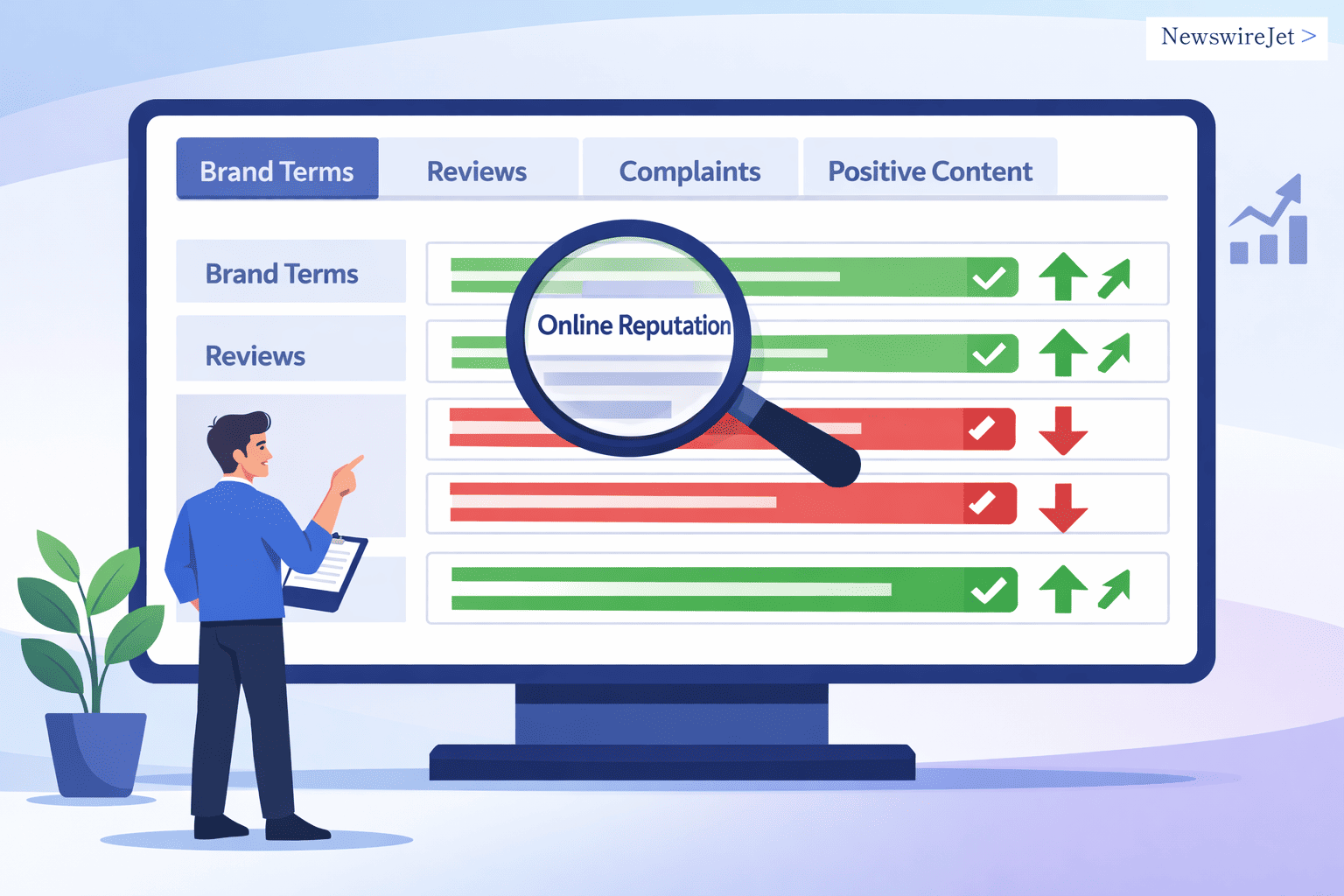
Targeting Online Reputation Management keywords is really about one thing, what shows up when someone searches your name, and whether it feels right. Most people will look you up before they decide anything. They do not read everything. They scan, open a result or two, and make a quick judgment.
If something negative is sitting near the top, even if it is old, it can stay in their head. You cannot control all of it, but you can add enough of the right content that it changes what people notice first. That is the work. Keep reading, it gets more practical from here.
What This Means for Your ORM Keyword Strategy
- We target branded + sentiment keywords so results match real customer experience
- We use multi-asset SEO reputation management, not relying on one page
- We focus on review generation and steady monitoring, instead of waiting for problems
What are ORM Keywords and Why Do They Matter?
Most people do not search a brand name on its own.
They add something to it. Usually a question, even if they do not phrase it that way. “Reviews.” “Complaints.” Sometimes worse.
That one extra word changes the results. It also tells you what they are thinking.
These searches usually happen when someone is unsure. Not at the start, not at the end, but right in the middle. That moment where they are deciding if they trust you or not.
What shows up there matters more than anything else you publish.
It is rarely dramatic. It is small things. A Reddit thread. A bad review that never got a reply. An article that feels one-sided. That is enough to create doubt.
You cannot clear all of it out. That is not how search works. But you can make sure it is not the only thing people see.
As highlighted by Digitaloft
"Reputation management begins with understanding exactly how audiences search for your brand. Key tactics include understanding and claiming all branded keywords. Are we actively shaping branded search results, or merely reacting?" - Digitaloft
Common searches look like this:
- Brand + reviews
- Brand + complaints
- Brand + scam or legit
- Brand vs alternatives
You will see the same patterns over and over. Different brands, same wording.
If you are not showing up in those searches, something else will.
What Types of ORM Keywords Should We Target?

Not every search has the same weight.
Some are light. Someone just typing your name. Others are heavier. You can feel it in the wording.
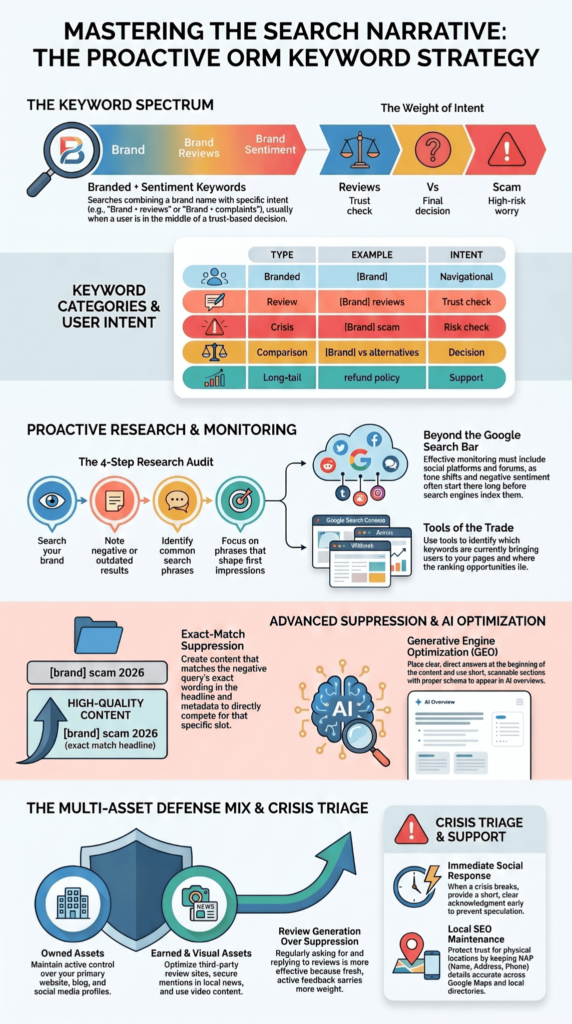
“Reviews” means they are checking. “Scam” means they are worried. “Vs” means they are close to choosing.
We group them, but not in a rigid way. Just enough to keep things clear.
| Type | Example | Intent |
| Branded | [Brand] | Navigational |
| Review | [Brand] reviews | Trust check |
| Crisis | [Brand] scam | Risk check |
| Comparison | [Brand] vs alternatives | Decision |
| Long-tail | refund policy | Support |
If one of these is missing, people will still search it. They will just land somewhere you do not control.
Review and crisis terms usually matter first. That is where people pause. Comparison comes after, when they are narrowing things down.
You do not need to cover everything at once. But you do need to know which ones matter early.
Why “Just Google Monitoring” Fails in 2026
By the time something shows up on Google, it has usually been around for a while.
That is the part people miss.
Most of this starts somewhere else. A comment, a post, a short thread. Then a few more people join in. It builds slowly, then spreads.
Search picks it up later.
If you only check Google, you are always catching things late.
Insights from Toolshero indicate
"Reputation monitoring tools research the web where a specific keyword is mentioned in articles and websites. These keywords could be a company name or brand but also a product. Effective Reputation Management requires proactive engagement to overcome negative reviews and opinions. Failing to do so could result in reputation damage [and] decreased profitability." - Toolshero
A wider view helps:
- Look at social platforms regularly
- Check forums and smaller sites
- Notice how people are talking, not just what they say
Sometimes the tone shifts before the volume does. That is usually the first sign.
This is not about watching everything all the time. It is just about not relying on one place.
How to Do ORM Keyword Research Step By Step
We start by looking at what people already see.
Search your brand. Go through the first page, slowly. Some results will feel fine. Others might look off, or out of date. That first scan tells you where things stand.
Tools like Google Search Console, Ahrefs, and SEMrush help fill in the gaps. They show which keywords bring people in, and which pages hold their place, giving a clearer view of keyword ranking opportunities.
Then we look at how people search. Most do not stop at a brand name. They add a word or two. “Reviews.” “Complaints.” “Refund.” You will see the same patterns repeat.
After that, we narrow it down. Not every keyword needs attention. Some carry more weight, especially the ones tied to trust.
Our process:
- Search the brand and review the top results
- Note anything negative, unclear, or outdated
- Add common search phrases people use
- Focus on the ones that shape first impressions
It is steady work. No shortcuts, just clear steps.
What is The Exact-Match Suppression Strategy?
This method is straightforward. You match the search exactly.
If a negative page ranks for a specific phrase, it is tied to that wording. A broad page will not move it. Search results tend to stay close to the query, especially when reputation in search engines is shaped by exact phrasing.
So we create content that uses the same phrase. Same wording, same focus, no detours.
If people search “[brand] scam 2026,” then that is the topic. The page answers it directly.
Key tactics include:
- Use the exact phrase in the headline
- Stay focused on that single query
- Match the page title and description
- Support the page with links
It is not about writing more. It is about matching what people type.
How to Optimize Content for AI Overviews (GEO)
Credits: Ansif – Build Fast with AI
AI summaries pull from pages that get to the point early.
If the answer is buried, it gets missed. If the structure is loose, it is harder to read.
So the writing shifts a bit. The answer comes first. The rest follows.
We focus on:
- Opening with a clear, direct answer
- Keeping sections short and easy to scan
- Adding schema where it fits
- Staying on topic from start to end
Search results now show both links and short summaries. Your content needs to work in both places.
That often means saying things sooner, and with fewer extra words.
Which Assets Should We Optimize for ORM?
One page will not carry your reputation. People see a mix of results, so you need a mix of pages.
Start with what you control. Your site, your blog, your social pages. Keep them updated. Make sure they answer the basic questions people have, while supporting steady keyword optimization across assets.
Then look at the pages you do not control. Review sites, articles, listings. They show up in search whether you like it or not.
Video helps too. A short, clear video can show up where text does not.
Our asset mix includes:
- Pages on your site tied to your brand
- Social profiles that are not left idle
- Review pages like Google Business Profile
- Mentions from news or local sites
- Video that answers common questions
The aim is simple. When someone searches your name, they see more than one point of view, and most of it is current.
Why Review Generation Beats Suppression
Pushing one bad result down the page does not fix much on its own.
New reviews do more. When people see recent feedback, they pay attention to that first. Older posts start to matter less.
There will always be a few negative reviews. That is normal. What people look for is how often it happens and how you respond.
Key points:
- Ask for reviews on a regular basis
- Do not collect too many at once
- Keep the request simple
- Reply to reviews, good or bad
Pages with steady activity tend to hold up better. They look current, and that carries weight.
How to Handle ORM During a Crisis on Social Media

Most issues show up on social platforms before they reach search.
A comment turns into a thread. More people join in. It can move fast.
If there is no response, people fill in the gap themselves.
A short reply early helps:
- Acknowledge the issue
- Keep the message clear
- Stay consistent across channels
- Watch how people respond
You do not need a long explanation right away. You need to show you are there and paying attention.
Handled early, many issues stay small. Ignored, they tend to grow.
FAQ
How do we target Online Reputation Management keywords for better search results?
We begin by choosing clear Focus Keywords such as online reputation and Reputation Management. We then add related terms like search engines, search results, and branded keywords.
We place these keywords in web page titles, Meta descriptions, and our content strategy. This process improves search visibility and helps our brand appear more often on search engine results pages.
How can we handle negative reviews and protect our brand image online?
We handle negative reviews by responding quickly with clear and respectful review responses. We use review management and online review management tools to track Online reviews and customer feedback.
We also identify fake reviews and remove harmful Negative content when possible. Strong customer service helps solve problems early and protects our brand reputation and brand image over time.
What tools help us monitor brand mentions and online reputation daily?
We use tools like Google Alerts, Social Listening systems, and sentiment analysis software to monitor brand mentions. We also review feedback on review sites, review platforms, and social media platforms.
By tracking social media interactions and media channels, we understand public opinion. This helps us improve reputation measurement and make better decisions in our reputation strategy.
How do we improve local SEO and manage review sites effectively?
We improve local SEO by keeping Business Listings accurate with correct NAP (Name, Address, Phone) details. We manage local listings management across Google Maps, review websites, and review pages.
We also send Review Requests to encourage more customer reviews. These actions improve search engine results and help local businesses gain better visibility and trust.
What should we do during a reputation crisis or sudden negative content spread?
We follow a clear Crisis Triage Process to respond quickly and calmly. We review search engine results and social media channels to understand the issue. We then respond using public relations and media and public relations strategies.
We may publish press releases and positive content marketing. We also use SEO reputation management and content audits to reduce Negative content and restore brand perception.
Why Targeting Online Reputation Management Keywords Matters Long-Term
Your name in search is not a snapshot; it grows over time. Old posts and reviews stay visible and shape what people think. If you do nothing, they speak for you. You need to guide that story with the right keywords and fresh content that match who you are today.
Think about what someone sees when they search your name a year from now. You can let it drift, or you can shape it. Keep updating pages, gathering reviews, and publishing content that reflects you. A simple step today can change tomorrow. Start with NewswireJet and take control now today.
References
- https://digitaloft.co.uk/how-to-leverage-seo-to-manage-your-brand-reputation/
- https://www.toolshero.com/marketing/reputation-management/
Related Articles