Written by David Quintero
Apple deliberately keeps its prices high. The company has never tried to compete mainly on cost. Instead, it protects margins and uses pricing to signal quality and brand value. Discounts are rare and usually apply to older models rather than the newest releases.
Apple focuses on justifying its prices through strong hardware design, its own software, and a tightly connected ecosystem of devices. Many buyers see the higher price as a sign of reliability and premium quality. Over time, customers become comfortable with how Apple products work together. Because switching often means replacing several devices, demand remains stable even when competitors lower their prices.
Core elements of Apple’s pricing strategy
- Apple maintains high prices to protect brand perception and sustain strong profit margins.
- Product tiering pushes many buyers toward mid-range models, which often deliver the strongest margins.
- Ecosystem lock-in increases retention and reduces sensitivity to price differences.
Historical Overview of Apple’s Pricing Evolution
Apple’s pricing strategy has changed a great deal since the company started in 1976. In the early years, its products reached a narrow audience. Most buyers were teachers, designers, and hobbyists who were willing to pay more for machines that felt new and different, often institutions investing in technology that supported career readiness and practical skills development.
Pricing strategies employed by Apple
Key pricing strategies and their business impact
Strategy
How It Works
Business Impact
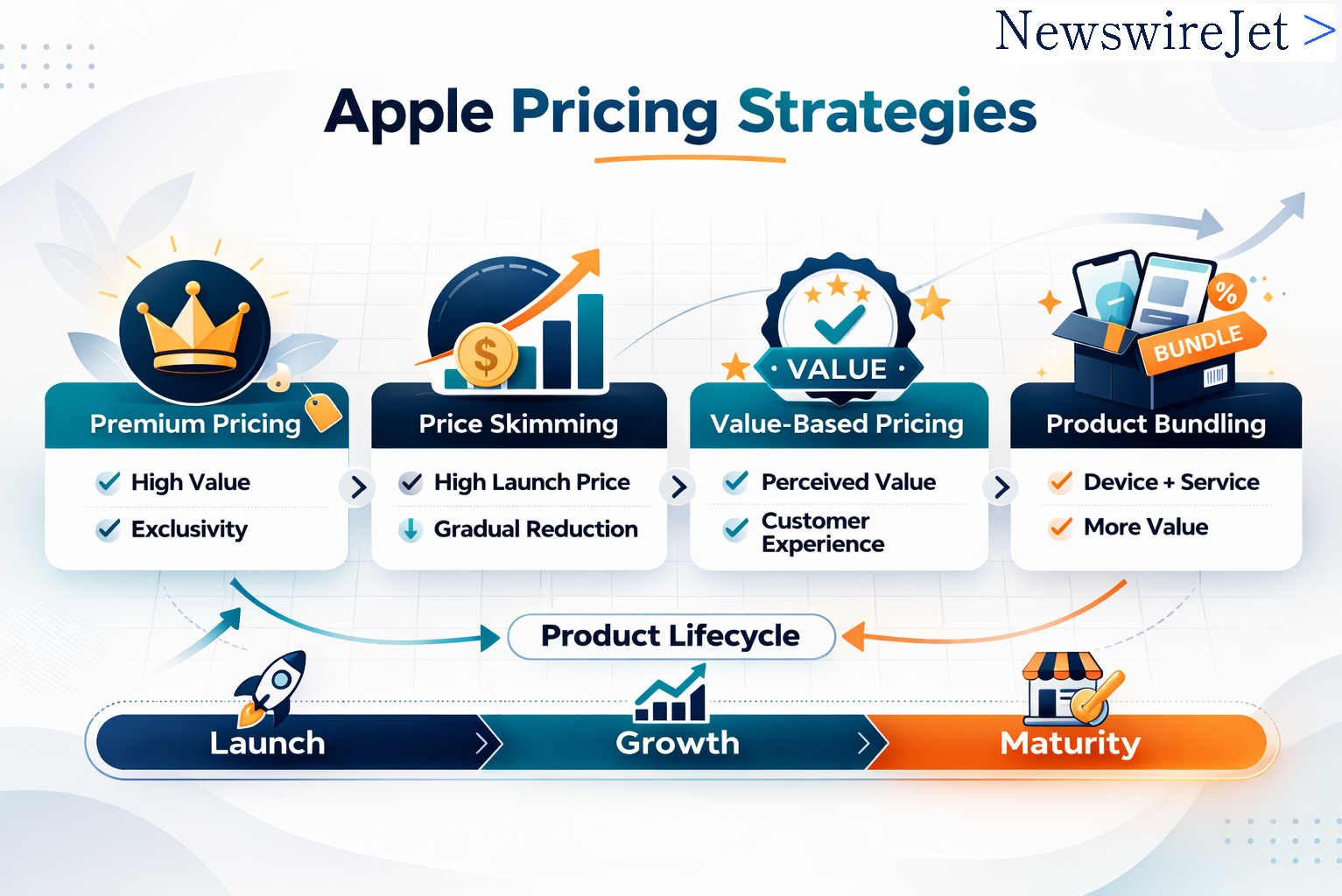
Premium Pricing
Sets higher price points than most competitors
Protects margins and strengthens brand perception
Price Skimming
Launches at high prices, then lowers over time
Maximizes early revenue and captures different segments
Value,Based Pricing
Aligns price with perceived product experience
Supports long,term customer satisfaction and loyalty
Product Bundling
Combines products or services in one offer
Increases average revenue per customer
Apple began in 1976 as a small computer maker. Its first buyers were teachers, designers, and hobbyists who cared about what these machines could do. Models such as the Apple II and the Macintosh sold for more than many rivals. Apple’s case was straightforward: better design, tighter software control, and a system that felt easier to use justified the cost.
By the 2000s, the company was no longer serving a narrow crowd. The iPod arrived in 2001, then the iPhone in 2007. Both stepped into crowded markets. Apple did not race to the bottom on price. It kept its products at the top end and let the brand carry the difference.
The pricing pattern stayed consistent. A new device debuted at a premium. When the next version appeared, the previous model dropped in price rather than disappearing. Customers who wanted the newest release paid full freight. Those willing to wait could buy into the same line for less.
Pricing Strategies Employed by Apple
Premium Pricing: Exclusivity or Profit Maximization?
Apple regularly sets its prices above most rivals. That choice is deliberate. The company protects its margins and keeps its products positioned at the top of the market.
Price shapes perception. Many buyers read a higher price as a signal of quality or status. When Apple charges more, some customers assume the product carries more value. Marketing research on value-based pricing reaches a similar conclusion: instead of chasing discounts or entering price wars, Apple prices its products according to what customers believe they are worth.
“Apple doesn’t get caught up in price wars because they know their value and aren’t afraid to price for it.” - Workzone
This reinforces why Apple avoids aggressive discounting and instead focuses on perceived value.
Value,Based Pricing: Connecting Price to Perceived Value
Apple uses value-based pricing. This means it sets prices based on what customers believe the product is worth, not just on production costs.
The company points to design, features, performance, and how well its devices work together. These factors help explain why the price is higher.
When customers feel the product delivers what they paid for, they are more satisfied. That satisfaction makes them more likely to buy from Apple again.
Skimming Strategy: Capturing Early Adopters
Apple often starts with a high price when it launches a new product. People who want the newest technology right away are willing to pay more.
After some time, Apple lowers the price, usually when a newer model comes out. This makes the product more affordable for other customers.
By doing this, Apple earns more money at the start and still attracts additional buyers later in the product’s life.
Product Bundling: Offering More for Less
Apple also uses product bundling. It offers related products or services together, sometimes at a small discount.
This can encourage customers to buy more than they first planned. Buying a device with accessories or added services can feel like a better deal.
As a result, Apple increases total sales, and customers feel they are getting more value for their money.
Product Segmentation and Pricing Tiers
Product segmentation plays a central role in maintaining premium positioning while expanding reach.
Example of product tiering structure
Product Category
Entry Tier
Mid Tier
Premium Tier
Smartphone Line
Standard Model
Plus / Enhanced Model
Pro Model
Laptop Line
Air Model
Standard Pro
High,End Pro
This tiered structure allows Apple to address multiple budgets without weakening its premium identity. Customers who enter at a lower tier often upgrade within the same product family over time.
A key part of Apple’s pricing strategy is product segmentation. The company sells several versions of the same type of product at different prices. This helps Apple reach people with different budgets without lowering its overall brand image.
For example, in the iPhone lineup, there are standard models and more advanced Pro versions. The Pro models cost more and include extra features. This gives customers a choice based on what they need and how much they want to spend.
The same idea applies to MacBooks. The MacBook Air is the more affordable option, while the MacBook Pro costs more and is built for users who need stronger performance.
Brand Loyalty and Customer Retention
Credits : samtime
Apple’s pricing strategy helps build strong customer loyalty. Many people choose Apple over other brands because they believe the products offer high quality and good value.
Apple rarely offers big discounts. Prices stay fairly steady. That consistency makes the products feel reliable and high-end. Over time, customers begin to link the higher price with better quality and new ideas.
“Higher prices create exclusivity. They reinforce the idea that Apple is a premium choice, something worth saving for.” - blankboard.studio
This perception strengthens emotional attachment and long-term retention.
Geographic and Market,Specific Pricing
Apple does not charge the same price everywhere. Prices change from country to country based on taxes, currency exchange rates, and local market conditions. That is why an iPhone may cost less in the United States than in India or parts of Europe.
In markets like India and China, Apple competes with lower-cost brands such as Xiaomi and Huawei. To compete, Apple offers lower-priced models like the iPhone SE. These models cost less than flagship versions but still carry the Apple name. In wealthier markets, the company keeps its higher-end models at premium prices.
Taxes and import fees also affect what customers pay. In countries with high tariffs, Apple products can end up costing much more than in places with lower trade costs.
Competitive Pricing in a Crowded Market
Apple competes with Android companies like Samsung, Google, and Huawei. Many of these brands lower prices or run frequent discounts to win more customers.
Apple usually does not do that. It keeps its prices high and steady. Instead of cutting prices, it points to features, performance, and how its devices work together to explain the cost.
Some competitors release cheaper versions of their main phones, such as Samsung’s Galaxy A series. Apple’s pricing for the iPhone and other products changes less often. This helps the company protect its brand and avoid being seen as just another low-cost option.
Psychological Pricing Tactics
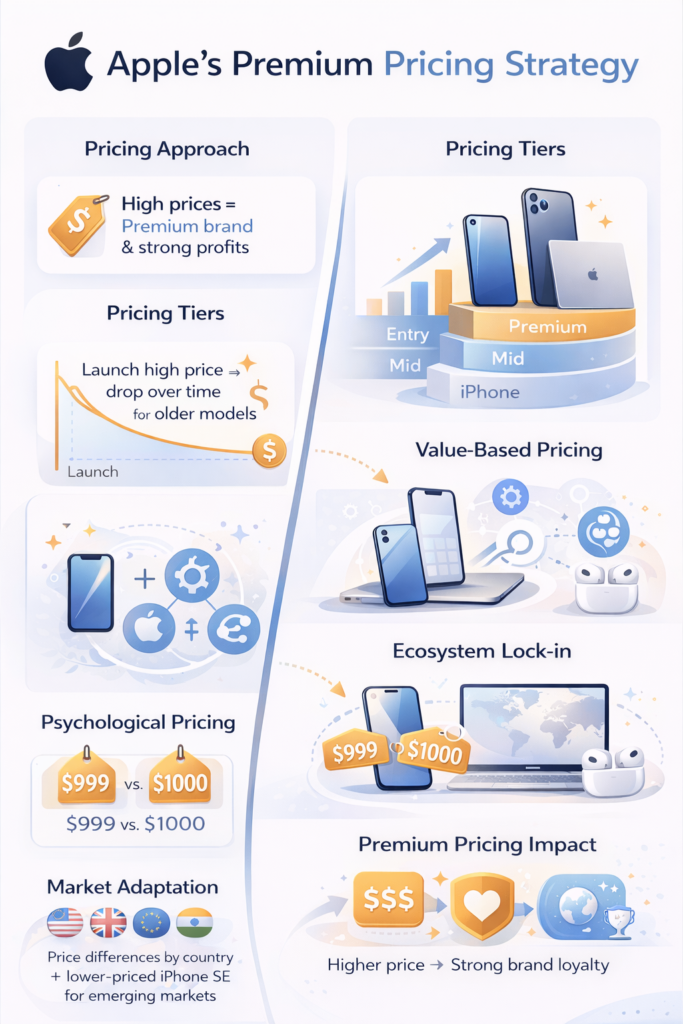
Apple often sets prices just below a round number. For example, $999 can feel cheaper than $1,000, even though the difference is only one dollar.
Many buyers pay attention to the first numbers they see. Because of that, $999 seems closer to $900 than $1,000 in their minds. In large organizations, even small pricing misjudgments can resemble hidden spreadsheet errors that quietly influence decisions and, over time, affect revenue outcomes.
Apple also adds free trials or service subscriptions with some purchases. These extras can make the deal feel better without actually lowering the main price.
The Ecosystem and Long,Term Value
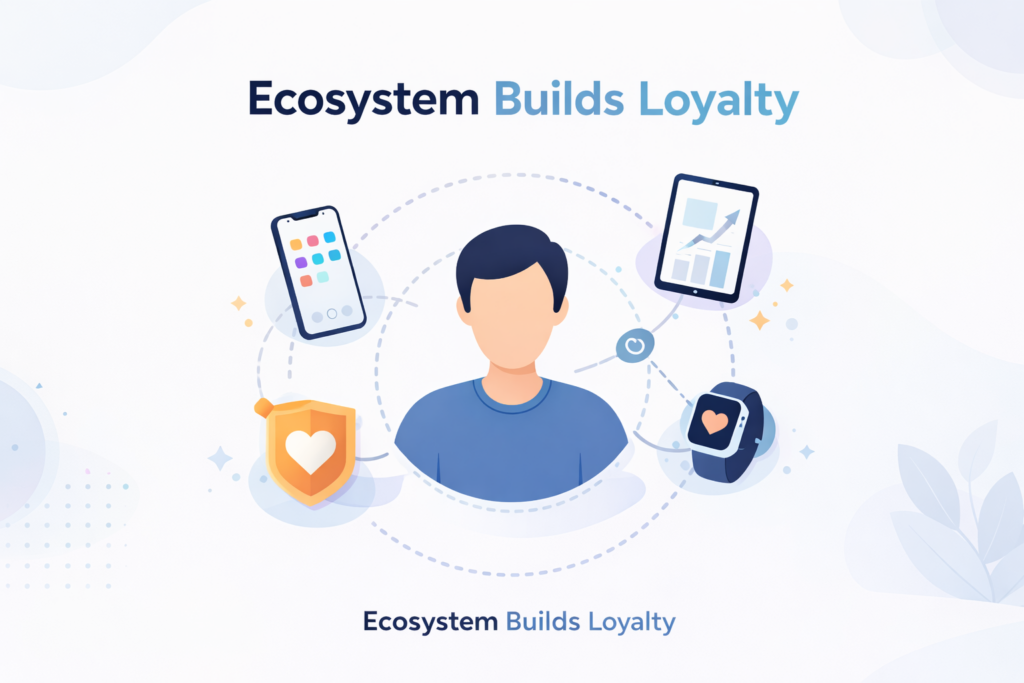
Apple’s ecosystem connects its devices and services. An iPhone, iPad, Apple Watch, MacBook, and AirPods all work through the same account and software. Services like Apple Music, Apple Pay, Apple Arcade, and iCloud bring in ongoing payments.
When someone uses several Apple devices and services, switching to another brand becomes harder. Photos, messages, apps, and subscriptions are all linked together.
Because of this, Apple earns money not just from one sale, but from repeat purchases and subscriptions over many years.
Future Trends and Challenges To Apple's Pricing Strategy
Apple faces strong competition from companies in China and India that sell good devices at lower prices. New technologies like artificial intelligence, augmented reality, and virtual reality may also change how much products cost to develop and build, especially as AI tools continue reshaping research, product development, and competitive strategy across the industry.
There is also pressure to make products in more environmentally friendly ways. That can increase expenses. Government rules about market power and app store practices could affect how Apple sets its prices as well.
In the future, Apple will need to protect its profits while adjusting to changing demand around the world.
FAQ
How does premium pricing influence customer loyalty and brand awareness?
Premium Pricing shapes how buyers judge quality and trust. When Apple products sit at higher price points, many consumers link cost with durability and status. This pricing strategy strengthens brand loyalty because people feel invested in a luxury brand experience. Over time, steady pricing builds customer trust and deeper customer loyalty, especially within competitive smartphone market conditions.
Why does price skimming matter in the smartphone market?
Price Skimming allows companies to launch new Apple products at higher price points, then lower them as market dynamics shift. This strategy supports revenue maximization early in a product cycle while still expanding market share later. In the smartphone market, it also influences consumer behavior, product valuation, and average selling prices across different models.
How do psychological pricing tactics affect perception of value?
Psychological Pricing uses odd numbers instead of round numbers to shape perception of value. Small shifts in price points can change how buyers assess product valuation, even when the difference is minor. This pricing strategy plays on consumer behavior patterns, helping protect market share while supporting Premium Pricing without openly discounting products.
What role does ecosystem integration play in revenue maximization?
Ecosystem integration connects Apple products with services such as Apple Music, Apple Pay, Apple Arcade, and iCloud storage. This service expansion increases revenue maximization beyond hardware sales. It also deepens brand loyalty and customer loyalty because switching disrupts daily habits. Strong ecosystem integration supports market share growth without relying only on lower price points.
How do global pricing and retail strategy impact market share?
Global Pricing adjusts price points based on supply chain costs, cell phone operators, and local market dynamics. A consistent retail strategy, including minimum advertised price policies, protects perception of value. Leadership under figures like the Apple CEO and Tim Cook has focused on balancing revenue maximization with long,term brand awareness in shifting economic conditions.
The long-term impact of Apple’s pricing strategy
Apple’s pricing strategy combines discipline and brand control. By protecting margins, reinforcing perceived value, and tying products together through its ecosystem, the company has maintained strong demand in competitive markets.
Future pressures will test that model. Lower-cost competitors, regulatory scrutiny, and new technologies may force adjustments. Still, Apple’s record shows a clear pattern: price is not just a number on a box. It is part of the brand itself.
For more strategic brand and business insights like this, visit NewswireJet and explore our latest analysis.
References
- https://www.workzone.com/blog/apple-marketing-strategy
- https://www.blankboard.studio/originals/blog/apple-marketing-strategy-brand-loyalty
Related Articles