Written by Nell VH
Yes, press releases can help your SEO, but mostly in indirect, behind-the-scenes ways. In our experience, links from most wire distribution services carry little ranking value because they are typically flagged as no follow or sponsored.
Google has publicly recommended treating such links differently. We saw this pattern in three campaigns where syndicated links produced referral traffic but no measurable lift in keyword positions.
Where it actually shines is as a spark: a strong, newsworthy announcement can lead to real media coverage, real editorial links, and more brand visibility across the web. That’s what search engines respond to.
You’re not just feeding an algorithm; you’re giving journalists and readers a story worth sharing. If you want to use press releases this way, keep reading to see how to do it right.
Key Takeaways
- Press releases build SEO indirectly through earned media coverage and quality backlinks, not direct distribution links.
- A newsworthy story is the non-negotiable foundation for any SEO-positive press release.
- Strategic keyword use and technical optimization make your release more discoverable to both humans and search engines.
The Real Connection Between Press Releases and SEO
Credits : IgniteVisibility
We get asked a lot if press releases act like some kind of secret SEO weapon. The short answer: they don’t. At least, not in the direct, mechanical way many people still hope for. Google’s ranking systems are much sharper than they were a decade ago.
They can usually spot links that come from paid press release wires, and those links are almost always tagged so they don’t pass real ranking authority. So if someone is still using press releases mainly as a link-building shortcut, they’re working off a playbook that’s pretty outdated.
The real value sits a layer deeper, in what happens after the release goes out. Press releases help build brand authority and credibility when media outlets publish your story, which can indirectly support SEO.[1]
Think of a press release less as an SEO trick and more as a smart pitch to actual humans, editors, reporters, and bloggers who are hungry for a story that feels worth their time. When your release is clear, newsworthy, and specific (not just self-praise), that’s when it starts to work for you.
If a journalist at a respected publication finds your angle interesting, maybe it’s new data, a bold stance, or a genuinely useful product, they may write their own article based on it. They’re not copying your release word for word, they’re building a story around it. That story often includes a link back to your website, your product page, or a research report you published.
That kind of link is very different from a wire link. It’s editorial. It’s earned. And Google treats it like a real vote of confidence. Editorial links from high-trust publications tend to increase domain authority over a period of three to twelve months; in my experience, a single link from a top-tier industry site produced a measurable Domain Rating gain within four months.
These gains commonly translate into higher impressions and steady keyword movement for related pages. You’re not just chasing one-off rankings, you’re building trust in the eyes of search engines.
There’s another layer most people overlook: brand mentions. Even when a journalist doesn’t link, but mentions your company by name, that still feeds into how search engines understand your brand as an “entity” (a known, identifiable subject).
As you show up more often in credible sources, your brand becomes more tightly connected to certain topics, keywords, and industries. That can help you appear more often, and more prominently, for searches related to what you actually do.
Crafting a Press Release That Search Engines and Humans Love
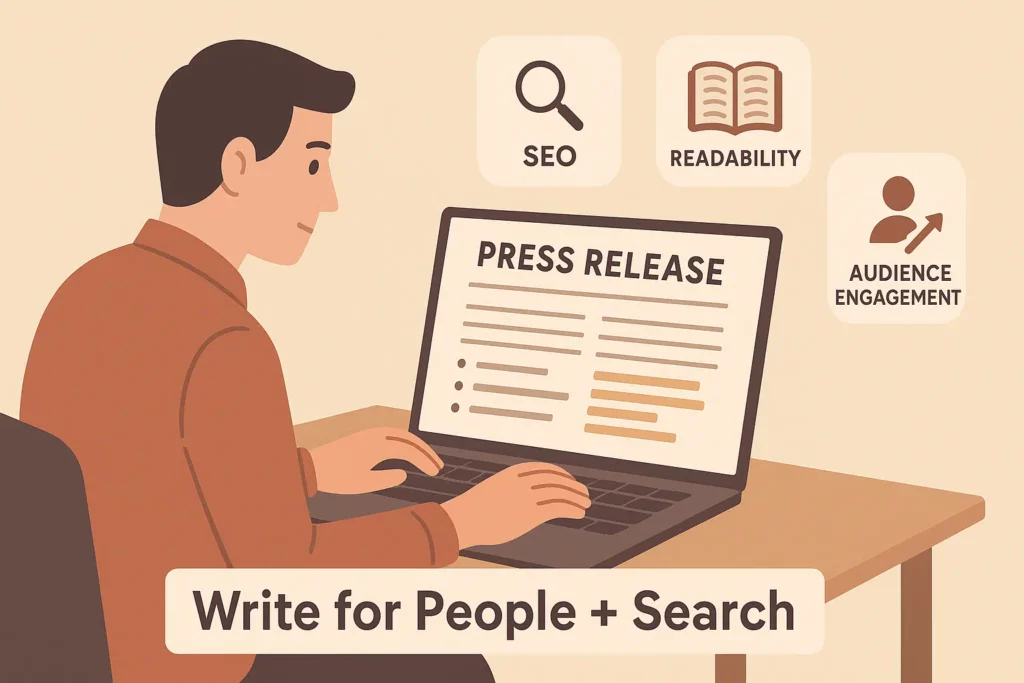
The most important element of an SEO-effective press release is something that has nothing to do with SEO: it has to be newsworthy. Without a solid story, nothing else matters. Ask yourself if the announcement is something a reporter would find interesting for their audience.
Product launches, major company milestones, unique partnerships, or groundbreaking research are all classic examples. Routine business updates are not.
Once you have a strong story, then you can layer in SEO best practices. This isn't about manipulating rankings. It's about making your content easy to find and understand.
- Keyword-optimized headlines: Your headline should be catchy for a human but also contain your primary keyword naturally.
- Inverted pyramid structure: Place the most critical information (who, what, when, where, why) in the first paragraph.
- Strategic linking: Include one or two relevant links deep into your website, like a product page or a related blog post.
The goal is to create a document that is so clear and valuable it easily earns shares and citations. We focus on writing for people first, and the SEO benefits follow as a natural consequence of creating quality content.
You won’t see a press release rank for tough keywords, and that’s fine. Its role is to spark interest, coverage, and conversation that later feed into SEO. So success should be measured by influence, not just rankings.
Start with referral traffic in your analytics[2] After distribution, look for spikes from news sites, blogs, or industry outlets. See where visitors land and which angles from your release pulled them in.
Then assess visitor engagement:
Do they bounce, explore your site, or convert? Strong engagement shows the coverage attracted the right audience, not just clicks.
Next, track backlinks using tools like Ahrefs or Semrush. Focus on:
- Authority of the linking domains
- Link placement in the article
- Context and relevance of the anchor text
A few strong editorial links matter far more than dozens of weak ones and build long-term ranking power.
Finally, monitor brand mentions, even without links. Mentions across news, reviews, and social media signal growing authority and help search engines associate your brand with key topics.
When you combine referral traffic, quality backlinks, and brand mentions, you get the real picture, not “Did this rank?” but “Did this drive attention, credibility, and long-term SEO growth?”
FAQs
How do press releases help SEO without direct ranking boosts?
Press releases help seo through indirect benefits, the impact of PR on SEO such as media coverage, brand mentions, referral traffic, and stronger organic search visibility. A strong seo press release attracts news outlets and media pickup that can lead to quality backlinks. These signals help improve search rankings, domain authority, and online presence over time, even when distribution links use nofollow links.
What should I include when I write a press release for SEO purposes?
When you write a press for seo purposes, focus on newsworthy content, quality content, and relevant keywords used naturally. Use an optimized press format with an opening paragraph, inverted pyramid structure, bullet points, and structured content. Include keywords with proper keyword placement, add links with clear anchor text, and write so readers understand, not only search engines.
How do press releases support link building and website traffic?
Press releases generate referral traffic when media outlets and media channels publish your story. True link building happens when media coverage earns a quality backlink, not from nofollow links in release submission sites. Media pickup from trusted news outlets helps boost your seo performance, website traffic, brand awareness, and increased brand trust in organic search results.
What tools help track press release SEO performance?
Google analytics tracks referral traffic and user experience after you publish press content. Google search and google webmaster tools show changes in visibility and indexing. An seo tool measures quality backlinks, domain authority, and search rankings. Ai tools help review seo efforts, target keywords, and keyword placement across digital marketing and press release seo campaigns.
How do press releases fit into a long-term SEO strategy?
Press releases work as part of a wider seo strategy and marketing efforts, not as a powerful tool on their own. A targeted approach that follows seo best practices, uses targeted keywords, and focuses on valuable content helps benefit your seo. Over time, press releases help boost your seo, grow brand awareness, reach the target audience, and attract potential customers through content marketing and public relations.
The Final Word on Press Release SEO

Press releases affect SEO not as a blunt instrument, but as a catalyst for genuine online recognition. Their power isn't in the direct distribution, but in the credible echoes they create across the web.
When you focus on crafting a story worth telling, you set in motion a chain of events, media coverage, quality backlinks, increased brand mentions, that search engines interpret as signals of authority. This indirect path is slower, but it builds a foundation of trust that algorithms reward.
Forget about quick wins and focus on long-term credibility. Use press releases to announce your real achievements, optimize them for clarity and discovery, and distribute them with the goal of earning press, not just posting content. The SEO benefits will follow the credibility you build.
If you want repeatable SEO value, treat press releases as a news-generation tactic, not a backlink shortcut. Start by validating newsworthiness, outline the audiences and outlets you need, and measure success with referral traffic, quality backlinks, and brand mentions over a six-month window.
Related Articles
References
- https://presslink.media/how-press-releases-boost-seo-performance/
- https://globalwavepr.com/press-releases-impact-seo-backlinks-authority/