Written by Nell VH
Corporate reputation management is the ongoing, deliberate work of shaping how people see your company, based on who you actually are and how you act. It’s less about polishing an image and more about aligning your public reputation with your real values, decisions, and day‑to‑day behavior.
That means ethical conduct, clear and honest communication, and relationships with stakeholders that feel real, not staged. When this is done well, it supports customer trust, employee pride, and long‑term financial health. Keep reading to see how you can systematically protect and strengthen your organization’s most valuable public asset.
Key Takeaways
- Proactive monitoring prevents small issues from becoming major crises.
- Employee satisfaction directly influences external brand perception.
- Transparent crisis response can actually strengthen stakeholder trust.
The Foundation of Public Trust
Credits : Matt Diggity
Your corporate reputation is like a mosaic, composed of countless small interactions and decisions. Each piece contributes to the overall picture people see when they think of your company. It's not something you can manufacture overnight. Reputation grows organically from your daily operations.
Many organizations make the mistake of treating reputation as a PR problem. They focus on messaging rather than substance.
The truth is, your external image reflects your internal reality. Strong online reputation management depends on aligning daily operations with values, because that consistency is what ultimately shapes long-term business reputation and public trust.
BrightLocal survey found “87% of respondents say a positive reputation is very important to their business success” online reputation review importance.[1]
We've seen companies spend millions on advertising campaigns while neglecting basic customer service. This creates a reputation-reality gap that consumers quickly detect. Modern buyers have finely tuned authenticity detectors. They can spot disingenuous branding from miles away.
- Monitor brand mentions across multiple channels
- Respond to feedback within 24 hours
- Conduct regular sentiment analysis
- Track review platform ratings
The digital age has transformed reputation management from periodic concern to continuous process. Information spreads faster than ever before. A single negative review can reach thousands of potential customers within hours. This reality demands constant vigilance and rapid response capabilities.
Building Blocks of a Strong Reputation

Corporate reputation stands on several pillars that work together to create a cohesive image. Your products and services form the most visible component. Quality and reliability directly shape customer perceptions. But beyond what you sell, how you operate matters equally.
Leadership integrity sets the tone for entire organizations. Employees watch how executives handle challenges and treat stakeholders. These observations trickle down through company culture, eventually reaching customers through frontline interactions. Ethical leadership creates a foundation of trust that withstands market fluctuations.
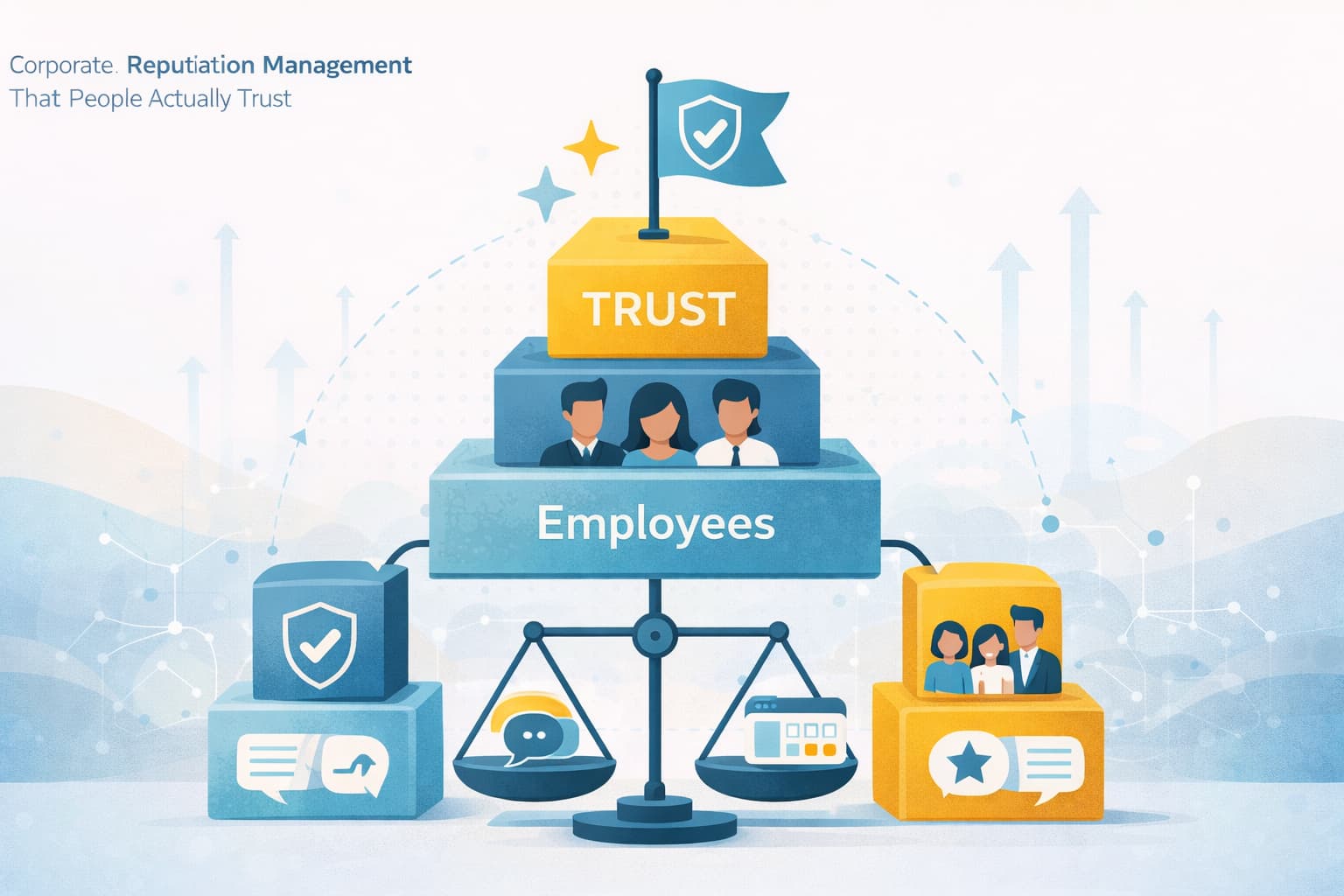
Your workplace environment functions as a reputation amplifier. Satisfied employees become brand ambassadors, while disengaged staff can undermine even the most carefully crafted messaging. The connection between employee experience and customer perception is stronger than many leaders realize.
Corporate social responsibility has evolved from nice-to-have to business imperative. Consumers increasingly factor ethical considerations into purchasing decisions. Companies that demonstrate genuine commitment to social and environmental causes build deeper connections with their communities. This goodwill becomes reputation capital during challenging times.
Financial performance matters, but not in isolation. Consistent profitability signals stability and competence. However, stakeholders now expect businesses to balance financial success with social impact. The companies that thrive long-term understand this dual responsibility to shareholders and society.
Practical Strategies for Reputation Protection
Regular reputation audits provide crucial baseline measurements. Start by searching your company name across major platforms. Note what appears on the first page of results, as most users never look further. Identify both positive content you can amplify and negative material requiring attention.
Reputation statistics show 92% of consumers read online reviews before buying and 88% trust them like personal recommendations.[2]
Social media monitoring should be continuous, not occasional. Establish systems to track mentions across all relevant platforms. Effective online reputation management for companies relies on real-time visibility into sentiment, enabling faster decisions that prevent small concerns from turning into public reputation risks.
Customer feedback loops create valuable reputation early warning systems. When you systematically collect and analyze reviews, patterns emerge. You might discover specific product features causing frustration or particular service touchpoints exceeding expectations. This intelligence guides improvement efforts.
Content marketing serves as proactive reputation protection. By creating authoritative, helpful content, you dominate search results for your brand terms. This pushes negative material down in visibility while demonstrating your expertise. Thought leadership content especially builds credibility over time.
- Develop clear response protocols for negative feedback
- Create content calendars highlighting company values
- Establish employee social media guidelines
- Implement regular reputation review meetings
Crisis preparedness separates companies that recover quickly from those that suffer long-term damage. Every organization faces challenges eventually. Having predetermined response plans ensures you address issues consistently and transparently. Practice scenarios regularly so your team responds instinctively under pressure.
When Things Go Wrong: Crisis Management
The initial hours following a crisis often determine its long-term impact. Speed and transparency matter more than perfection. Acknowledge situations quickly, even if you don't have all answers yet. Silence often gets interpreted as indifference or incompetence.
Take responsibility where appropriate. Consumers respect organizations that own their mistakes. Defensiveness or blame-shifting usually backfires. A credible reputation repair effort focuses on visible corrective action, accountability, and operational change rather than short-term messaging or image control.
Communication consistency prevents mixed messages from complicating recovery. Designate specific spokespeople and ensure they share the same core information. Different stories from different sources create confusion and erode credibility. Centralize messaging while allowing for appropriate customization across channels.
Post-crisis analysis provides valuable learning opportunities. After resolving immediate issues, conduct thorough reviews of what happened and why. Identify process improvements that could prevent similar situations. Share relevant findings with stakeholders to demonstrate your commitment to continuous improvement.
Recovery timelines vary depending on crisis severity and response effectiveness. Some organizations rebound stronger than before by handling challenges with integrity. Others never fully regain lost trust. The difference often lies in whether they treat reputation repair as a campaign or a fundamental change in operations.
Measuring What Matters
Sentiment analysis quantifies the emotional tone surrounding your brand. Advanced tools can scan thousands of mentions across digital platforms, categorizing them as positive, negative, or neutral. Tracking these metrics over time reveals reputation trends before they become obvious through sales figures or review scores.
Review platform metrics offer straightforward reputation indicators. Monitor your average ratings across Google, industry-specific sites, and social media. Pay attention to review volume as well as scores. Sudden increases in negative reviews often signal emerging issues requiring investigation.
Social media engagement rates reflect brand affinity. Likes and shares indicate positive associations, while angry reactions suggest perception problems. Comments provide qualitative insights into how people view your company. These informal conversations often reveal truths formal surveys miss.
Employee satisfaction surveys function as internal reputation barometers. Since employees experience your company most intimately, their perceptions predict external reputation trajectories. Disengaged employees rarely create delighted customers. Regular pulse checks help identify cultural issues before they impact public perception.
Competitive benchmarking provides context for your reputation metrics. Understanding how you compare to industry peers helps set realistic improvement targets. If your ratings consistently trail competitors, fundamental changes may be necessary rather than superficial messaging adjustments.
FAQs
How does corporate reputation management protect trust in the long term?
Corporate reputation management protects trust in the long term by aligning brand image, corporate identity, and real business behavior. When a company consistently delivers reliable products and services, ethical decisions, and strong customer service, public perception improves. This consistency builds a good corporate reputation, supports financial performance, and creates lasting competitive advantage beyond short-term marketing efforts.
How can companies monitor online reputation in real time effectively?
Companies monitor online reputation in real time by tracking brand mentions across social media, social networks, and digital platforms. Media monitoring tools use sentiment analysis and content analysis to identify positive or negative conversations. Continuous monitoring helps teams respond quickly to issues, protect online presence, and reduce the risk of reputational crises before they escalate.
What role do employees play in managing corporate reputation?
Employees influence corporate reputation through daily behavior, customer interactions, and workplace culture. Human resources policies shape the work environment, which directly affects customer experience and word of mouth. When employees feel engaged and supported, they reinforce corporate social values and brand management efforts, making reputation management more credible and consistent over time.
How should companies handle a bad reputation and online criticism?
Companies should address a bad reputation through structured review management and clear crisis management procedures. This includes acknowledging negative feedback, explaining corrective actions, and improving weak processes. Strong risk management and stakeholder engagement prevent repeated issues. Effective online reputation management focuses on measurable improvements, not defensive messaging or temporary image repair.
How can organizations measure corporate reputation accurately?
Organizations measure corporate reputation by combining reputation measurement tools, sentiment analysis, and third-party research. Measuring corporate reputation includes tracking public perception, financial reputation, online corporate reputation, and stakeholder trust. Artificial intelligence and machine learning improve data accuracy, but human analysis is necessary to interpret results and guide reputation management strategy decisions.
Your Reputation Roadmap
Corporate reputation management requires continuous attention rather than periodic campaigns. The companies that maintain strong reputations integrate reputation considerations into all decisions. They recognize that every employee action and business choice either builds or erodes trust.
Start with honest assessment of your current reputation reality. Identify gaps between how you want to be perceived and how you actually appear to stakeholders. Prioritize addressing the most significant discrepancies first, even if they're uncomfortable to confront.
Build reputation monitoring into your regular business routines. Designate responsibility for tracking key metrics and responding to feedback. Empower frontline employees to address concerns quickly, reducing escalation to formal complaints. The best reputation management often happens through small, daily interactions.
Remember that reputation recovery takes longer than reputation building. Consistency over time proves genuine change more convincingly than any marketing campaign. Stakeholders need to see sustained improvement before revising their perceptions. Patience and persistence eventually rebuild even damaged reputations.
Your corporate reputation represents the cumulative effect of countless actions and decisions. By managing it strategically, you protect your ability to attract customers, talent, and investment. The effort required seems substantial until you consider the cost of reputation loss. What step will you take today to strengthen yours?
Related Articles
- /online-reputation-management-for-companies/
- /online-reputation-management-and-business-reputation/
- /reputation-repair-3/
References
- https://www.brightlocal.com/research/online-reputation-management-survey/
- https://profiletree.com/stats-that-show-online-reputation-management/